DIESEL COLD AIR
INTAKE
HOUSTON
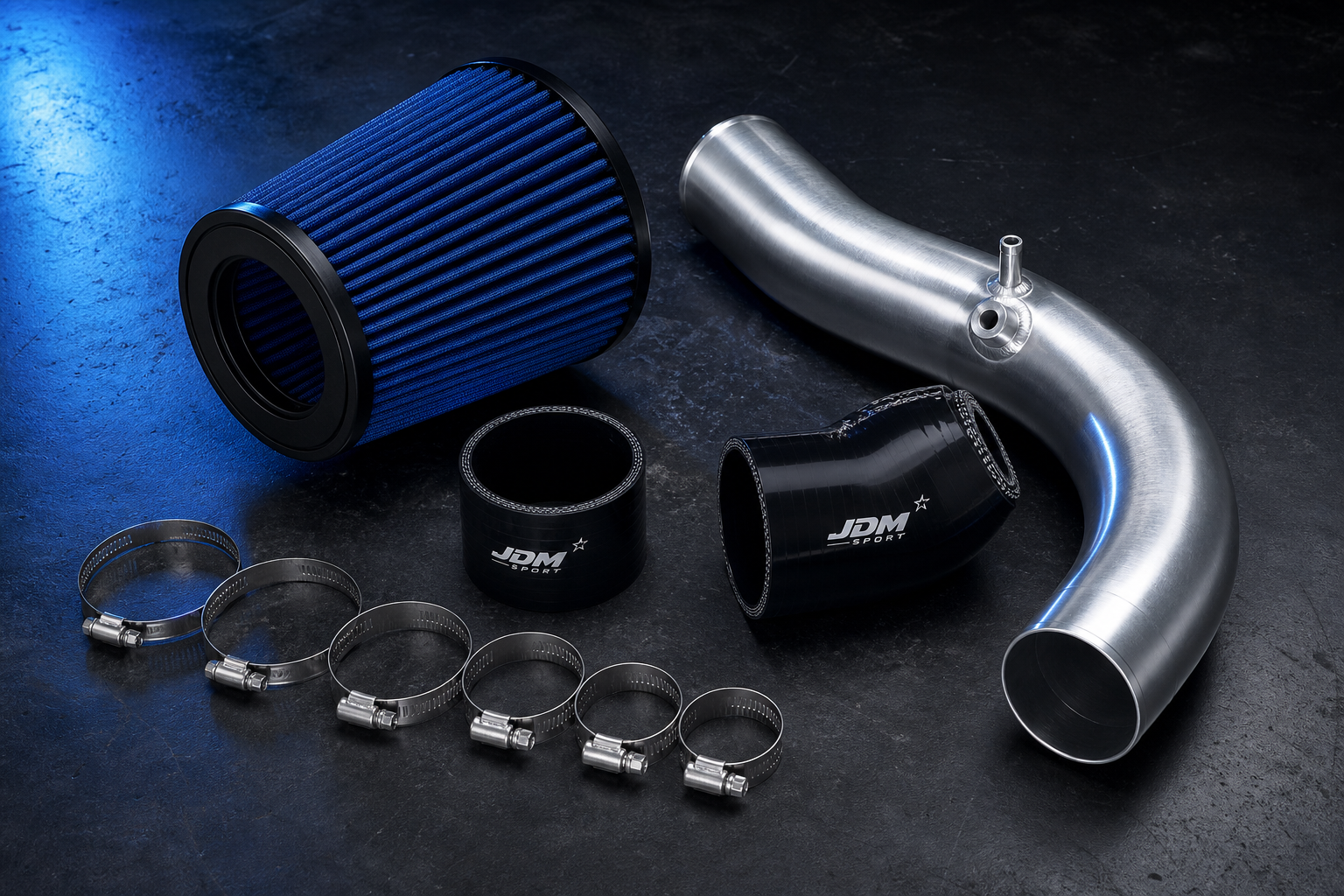
High-flow air intake systems for Cummins, Duramax, and Power Stroke diesel trucks. We're honest about what intakes actually do on a turbocharged diesel — and where they fit in the larger build picture.
Here's the Honest
Answer on Diesel
Intake Upgrades.
On a naturally aspirated engine, a cold air intake can produce meaningful power gains on its own. On a turbocharged diesel, it doesn't work the same way. The turbocharger is the air-moving device — it compresses the inlet air regardless of what's upstream. A high-flow intake reduces pre-turbo restriction and can lower inlet air temperatures by drawing air from outside the engine bay, but the power gains from an intake alone on a turbocharged diesel are in the 5–10 rwhp range at most, and only in conjunction with a tune revision that takes advantage of the reduced restriction.
Where intake upgrades genuinely matter on diesel performance builds: on compound turbo setups where the secondary turbo needs clean, unrestricted pre-charge air, and on high-power builds where the factory airbox becomes a genuine restriction at elevated engine demand. At those power levels, the intake upgrade is part of the system — not a standalone power add.
The EFI Live calibration after an intake upgrade is what captures the available benefit. The intake opens the door; the tune walks through it. The intercooler downstream of the intake is the more impactful thermal upgrade on builds where heat is the limiting factor.
- Reduces pre-turbo inlet restriction
- Draws cooler air from outside the engine bay
- Improves pre-charge air temperature
- Supports compound turbo builds
- 5–12 rwhp paired with a tune revision
- Add significant power without a tune
- Replace the intercooler's thermal role
- Compensate for a restrictive turbo
- Solve fuel system limitations
Cold Air Intake vs.
High-Flow Filter — Right Fit for the Build.
Not every intake build path is the same. Some trucks benefit from a full cold air intake relocation. Others get the most benefit from a high-flow drop-in filter that improves flow without changing the airbox location. The power target and the rest of the build determine which is right.
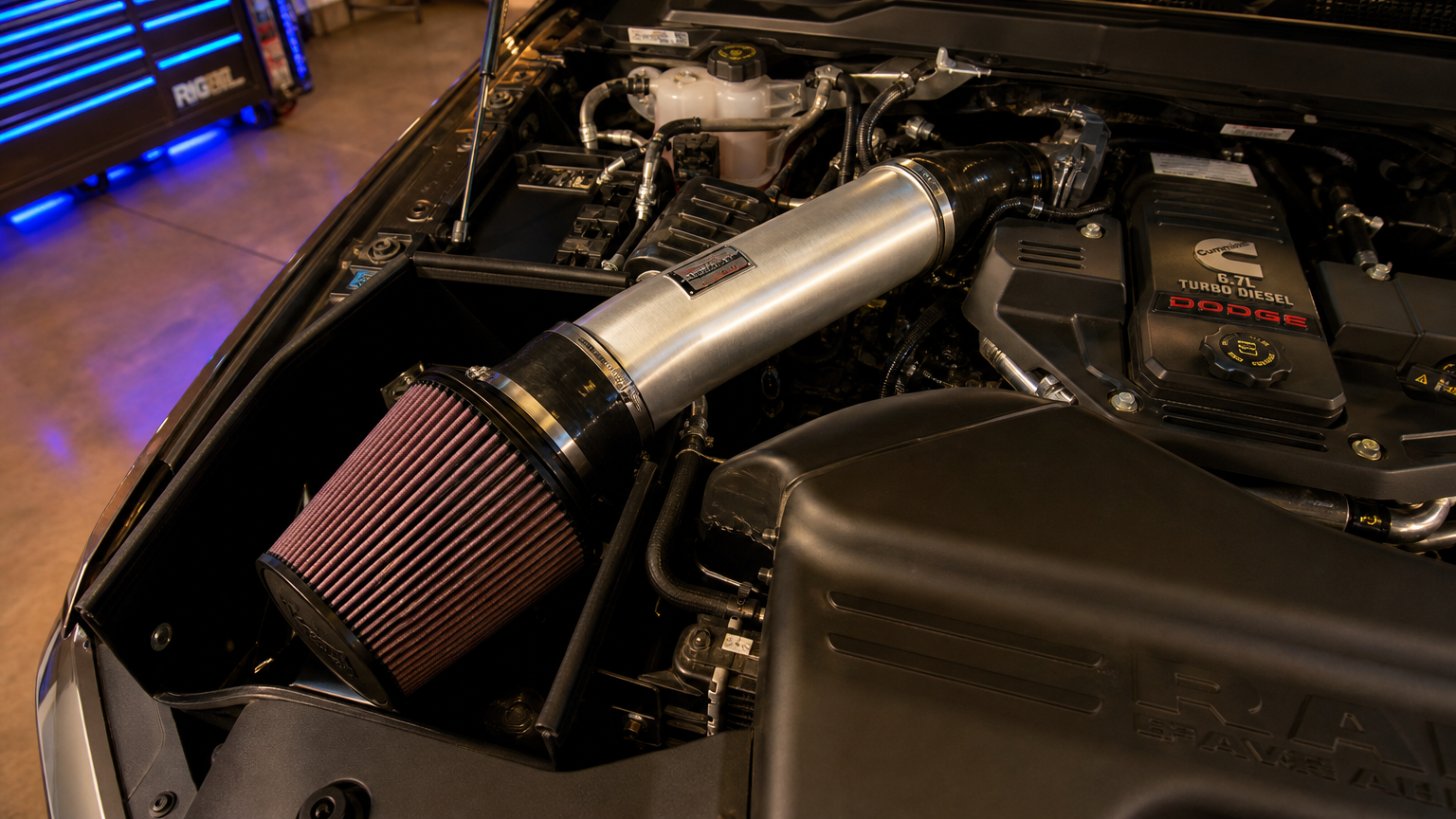
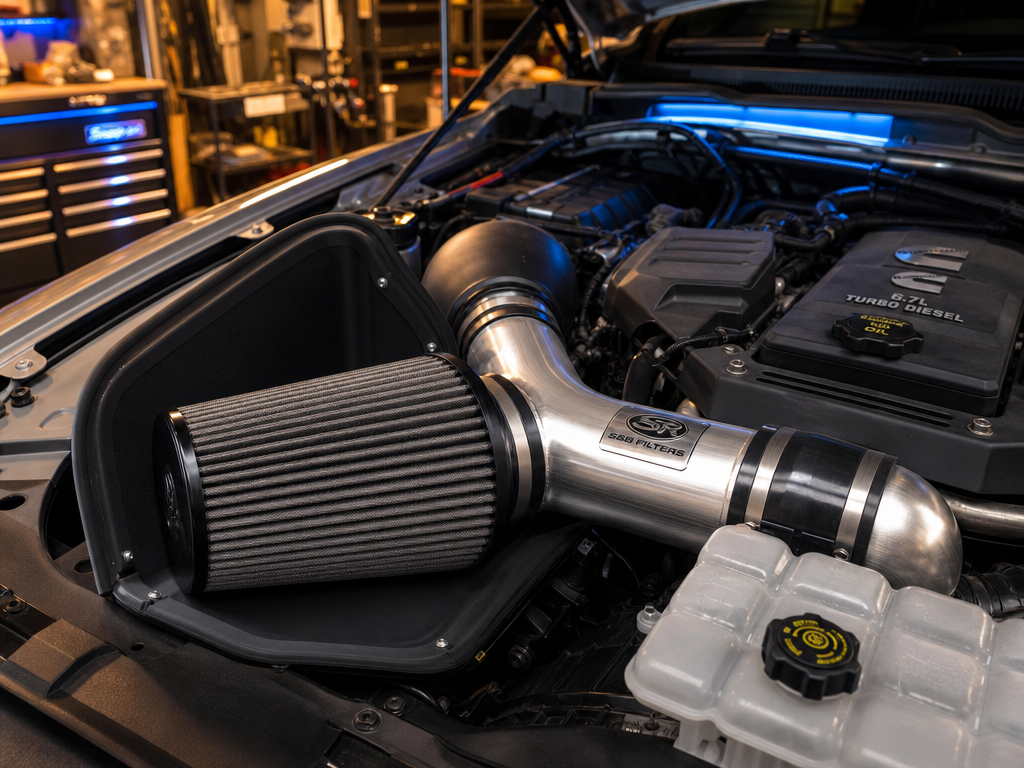
A full cold air intake system relocates the filter to draw air from outside the engine bay — typically in the fender well or below the front grille. This is the configuration for compound turbo builds where pre-charge air temperature and unrestricted flow genuinely matter. Brands we install: S&B Filters, AFE, AEM. The intake tube routing, filter size, and heat shield configuration are all part of the spec. Tune revision after install. Cold air intake for the Duramax as part of the Silverado 2500 compound turbo build.
- Draws air from outside the engine bay
- Larger filter volume — less restriction
- Heat shield included — separates from engine heat
- Required on compound turbo builds
- Tune revision after install
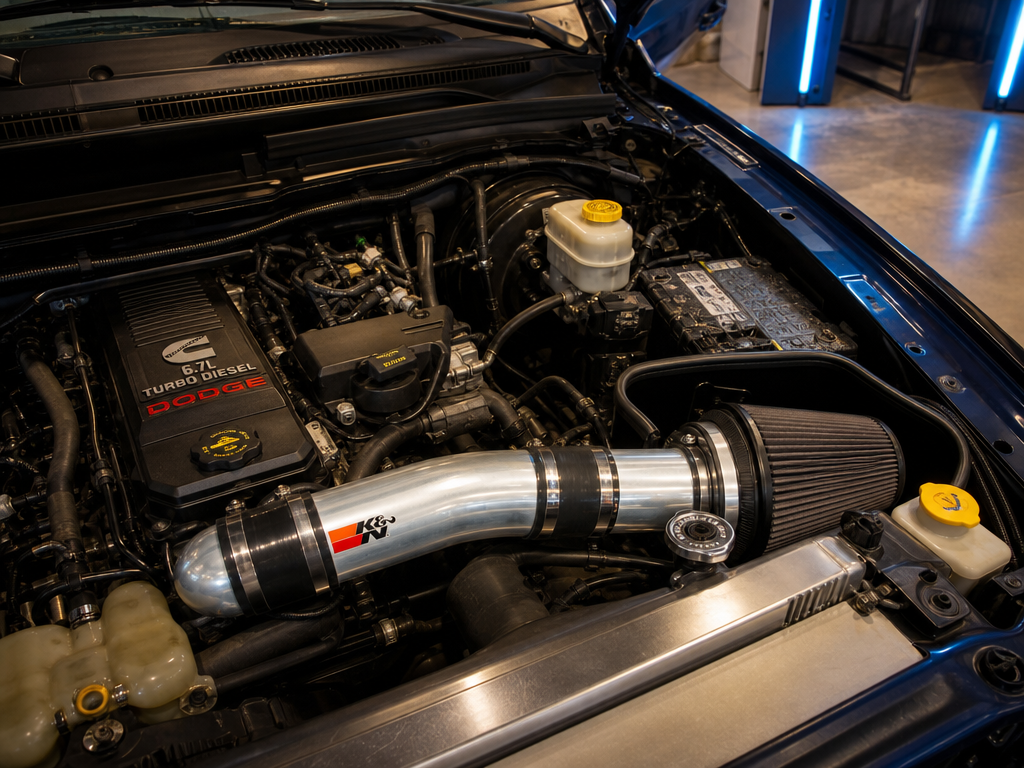
A high-flow drop-in filter replacement improves flow over the factory paper element without relocating the airbox. It's the right choice for moderate Stage 1–2 builds where the factory airbox location isn't a restriction and a full CAI isn't warranted by the power target. Lower cost and simpler install — and if the build grows later, upgrading to a full CAI from here is straightforward. Cold air intake for the Cummins discussed as part of the Ram 2500 build plan.
- Drop-in replacement — factory airbox retained
- High-flow oiled or dry filter media
- Right for Stage 1–2 builds
- Lower cost — upgradeable later
Intake First Is Fine.
But It's Not the
Priority Upgrade.
An intake upgrade is an appropriate early build step — it's relatively inexpensive and it opens the pre-turbo flow path for what comes after. But the priority order for diesel performance work is: fuel system, then tune, then exhaust, then turbo. The intake fits alongside those steps — not in front of them.
On compound turbo builds, the cold air intake is spec'd at the same consultation as the compound turbo and intercooler. The three are one system — they're planned together and installed in the right sequence. A tune revision closes the system after all hardware is in place.
If you're asking whether to spend the intake budget on an intake or on a tune, the answer is the tune. That's not a sales position. That's the honest answer about where the power comes from on a turbocharged diesel.
Diesel Intake Upgrade FAQ
Straight answers on diesel cold air intake upgrades.

INTAKE WORK
DONE HONEST.
Diesel cold air intake systems in Houston for Cummins, Duramax, and Power Stroke trucks. We tell you what the intake actually does for your build — and what it doesn't. If the tune is the better first spend, we'll tell you that. Book a consultation and we'll scope the right path.