DIESEL ECM
TUNING
HOUSTON
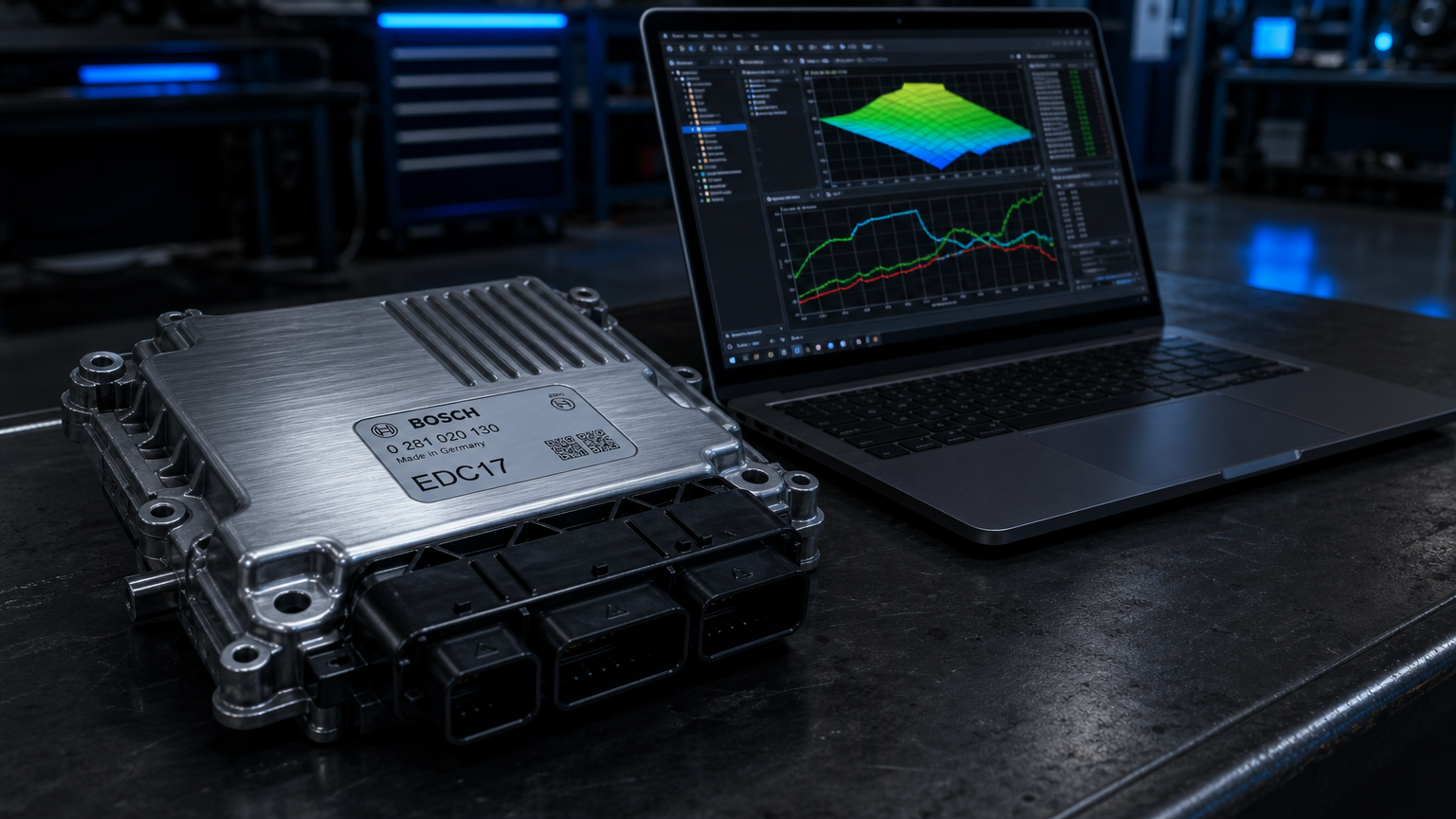
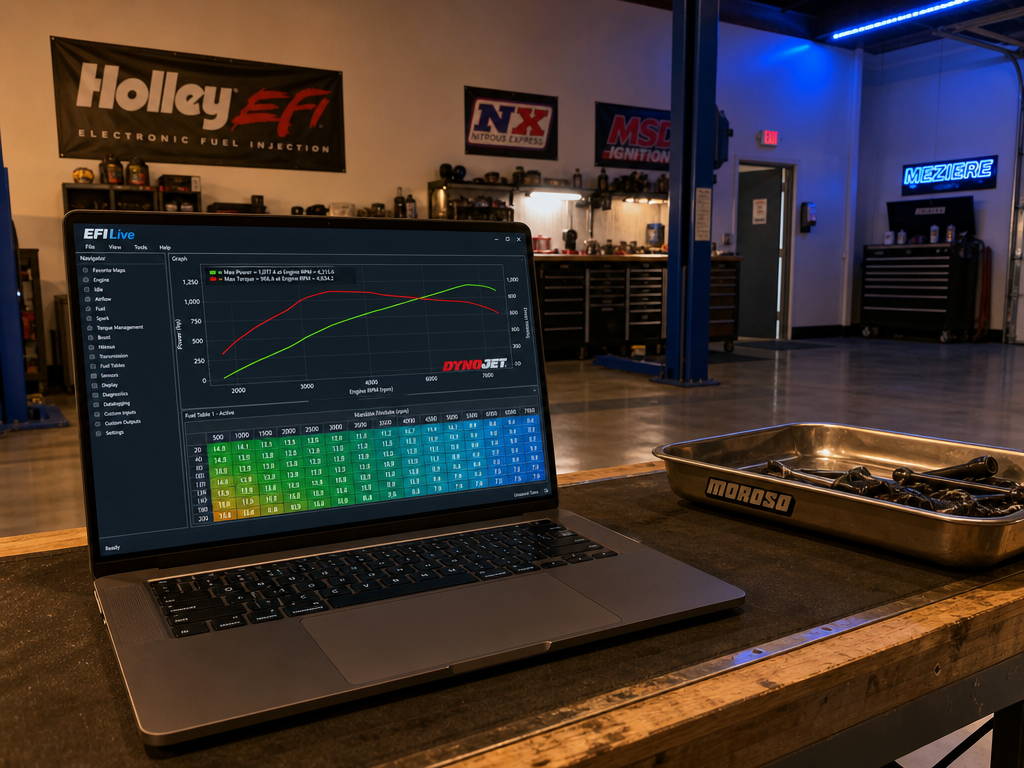
Custom EFI Live and HP Tuners calibration — not a mail-order file loaded on a stock tune profile. Every pull is platform-specific, mod-specific, and dyno-verified.
A Canned Tune Is Someone
Else's Calibration File.
Every mail-order tune file was written for a stock truck in a specific fuel zone under a specific set of assumptions about the mods it's running. If your platform, your mods, your elevation, or your fuel don't match those assumptions — and they almost never do — that file is wrong for your truck. It might run. It'll run suboptimally at best. At worst, it's building pressure the calibration wasn't written to account for.
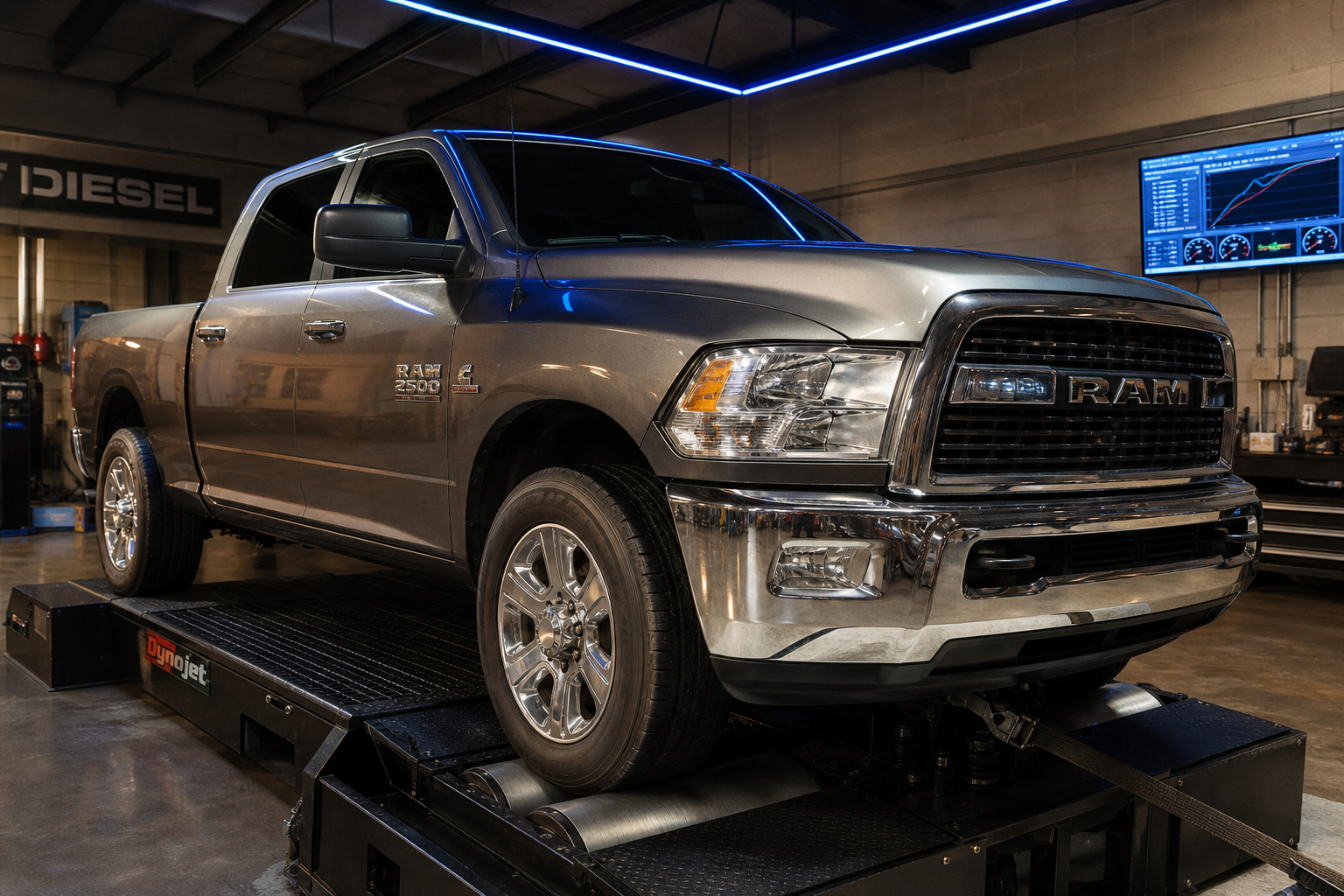
We write custom calibration. Every tune starts with a baseline pull to see exactly what the truck is doing before we touch a parameter. We build a file for your platform, your mods, and your fuel. Then we pull again. That's what a real build process looks like.
The fuel system a tune demands matters here — once you write an aggressive calibration, the factory pump, injectors, and lift pump become the limit. We spec the fuel side before we tune aggressively, not after something fails.
Cummins, Power Stroke & Duramax.
Three Different Conversations.
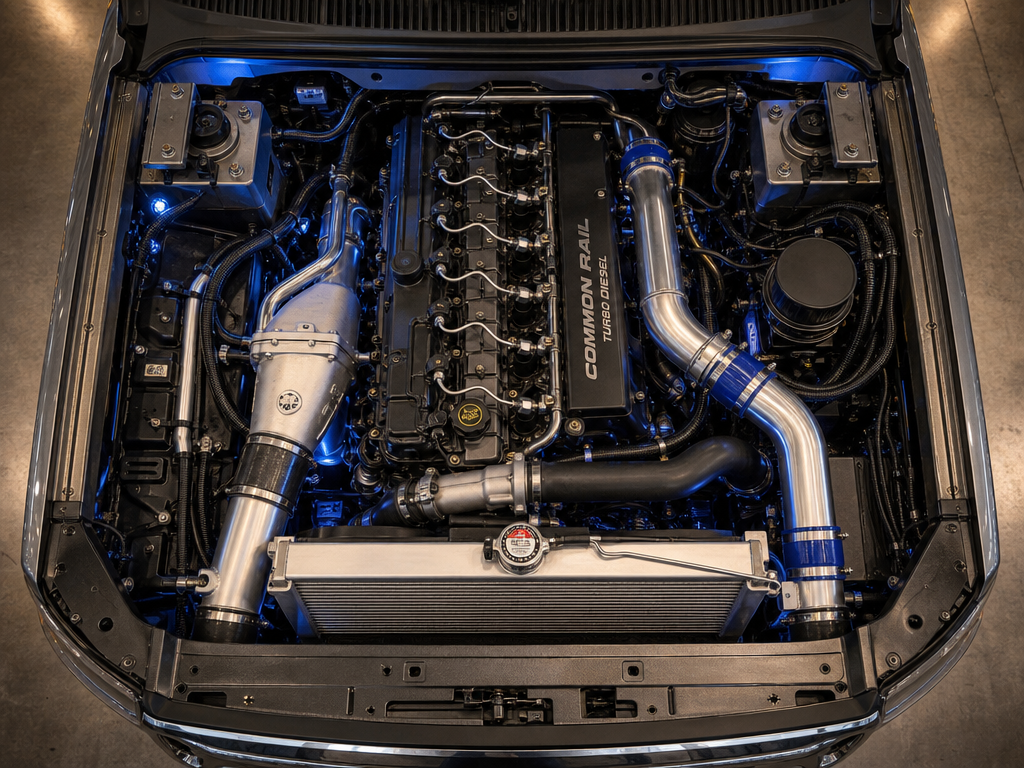
Platform-specific calibration is not a sales tactic. It's the difference between a tune that holds up under real load and one that felt good on the first pull. The injection timing, rail pressure, boost targets, and turbo mapping for a 6.7 Cummins with compound turbos is a fundamentally different file than what works on an L5P Duramax with the factory injection system. We don't cross those lines.
EFI Live is the standard for the Ram 2500/3500 Cummins. We tune stock platforms, compound-turbo builds, and sled pull trucks. The 5.9 12-valve and 24-valve are different platforms from the 6.7 — different rail targets, different timing windows. We know both.
The 6.4 runs EFI Live or HP Tuners. The 6.7 gets CP4 failure addressed first — then the tune. Both platforms have EGR and DPF considerations that change what a responsible calibration looks like. We're honest about that before we write a file.
The LBZ and LML respond well to EFI Live. The L5P has tighter OEM tuning constraints that require specific software. LBZ injectors are also a platform limit at higher power — we account for that in the tune target before the injectors fail on your bench.
What a Custom
Diesel Tune Actually Includes
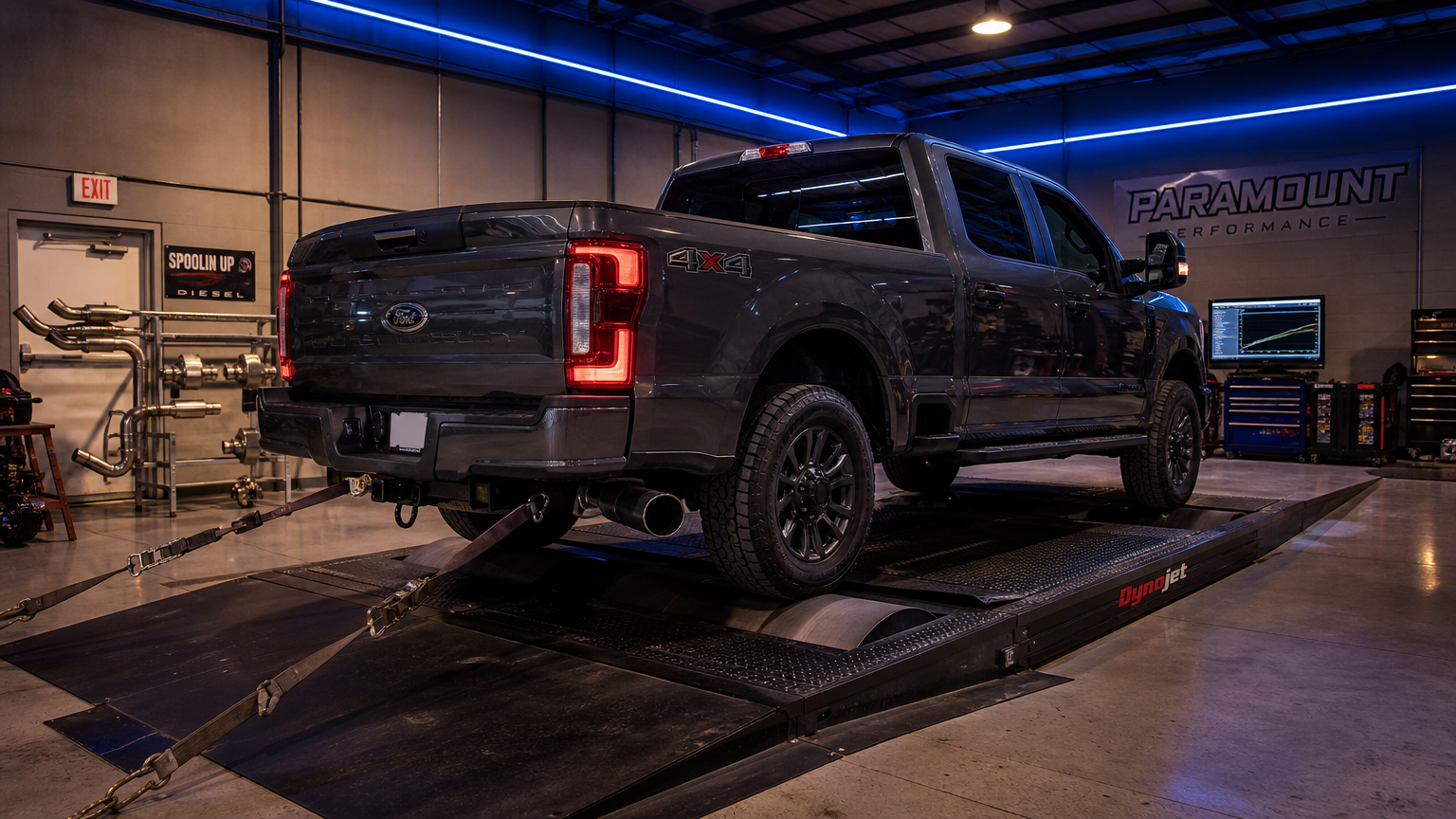
Every tune we write starts with a dyno baseline on your truck — not on a reference mule, not from a comparison file. We want to know what your platform is doing before we touch a single parameter. Then we build toward your use case.
A tow tune is calibrated for sustained load, transmission behavior, and exhaust gas temperature management over distance. A stage tune for a compound-turbo sled pull truck is a different document entirely — different boost targets, different fueling curves, different timing strategy. A canned file can't be both. We don't pretend one file fits everything you're doing.
If your build includes turbo systems the tune has to match, we write the calibration after the turbo hardware is on the truck — not before, not guessing at what the numbers will be.
See our full position on deletes and emissions equipment — we address it plainly.
The Tune Is Not the
End of the Build.
A custom ECM tune will unlock the power the platform already has capacity for. It won't manufacture power your hardware can't support. Push a tune past what the injection system can deliver — and you'll find out where that ceiling is the hard way.
This is why we look at the full system. A stage tune on a truck with a failing factory lift pump is a liability. A tow tune on a truck with a 65,000-mile injection system running higher fuel demand is a different calculation than the same tune on a fresh platform.
The best tuned trucks we've built started with an honest assessment of what the hardware can handle, addressed the limits before the calibration went aggressive, and came out with a dyno sheet that reflects a truck that will hold those numbers under real-world load. That conversation starts at a build consultation in the shop.
Diesel ECM Tuning FAQ
The questions we answer before any truck goes on the dyno.

BRING THE TRUCK.
WE'LL PULL IT.
Custom diesel ECM tuning in Houston for Cummins, Power Stroke, and Duramax. Platform-specific calibration written on your truck, for your mods, verified on our dyno. Book a consultation and let's talk through what your build actually needs.