DIESEL PERFORMANCE
SHOP
SERVING RICHMOND, TX
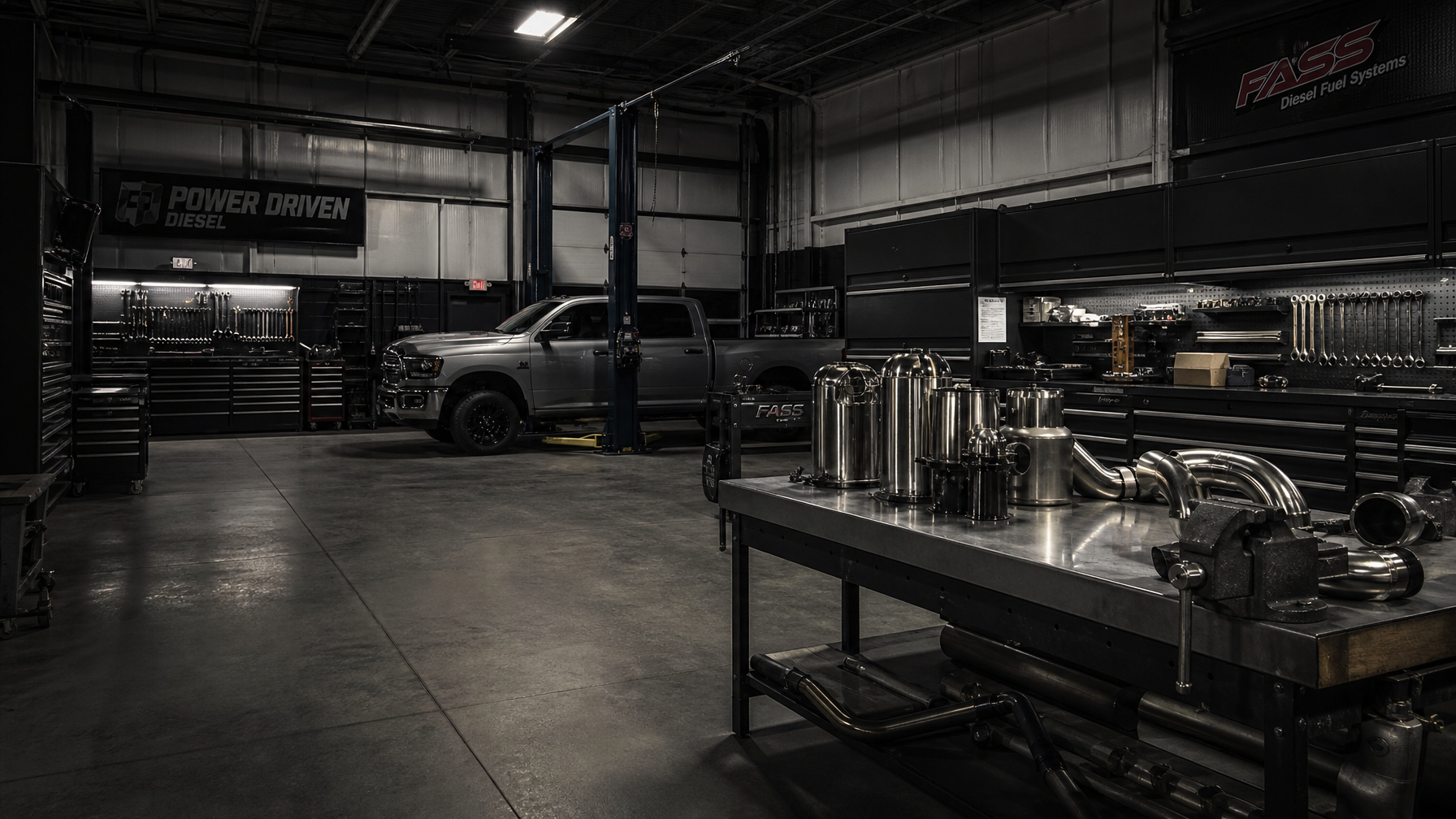
Richmond trucks work for a living, and the ones that come to us get tuned, fueled and cooled for it. Cummins, Power Stroke and Duramax builds, done at our Houston shop and proven on the dyno.
Why Richmond Drivers Make the Drive for Diesel Performance
Richmond was settled in 1822 on a bend of the Brazos River, and the area has been putting trucks to work ever since. Today that means ranch trucks, equipment haulers and family pickups with a camper behind them.
Most of that work does not need a specialist. Some of it does. When a truck has to pull a loaded trailer across Fort Bend County every week and still start on a cold morning, the tune, the fuel system and the cooling system all have to be right together.
That is what the trip to our Houston shop buys: Cummins, Power Stroke and Duramax knowledge and dyno time, in one place. We would rather you make that drive once or twice for the right reasons than often for the wrong ones.
What Richmond Diesel Trucks Come In For
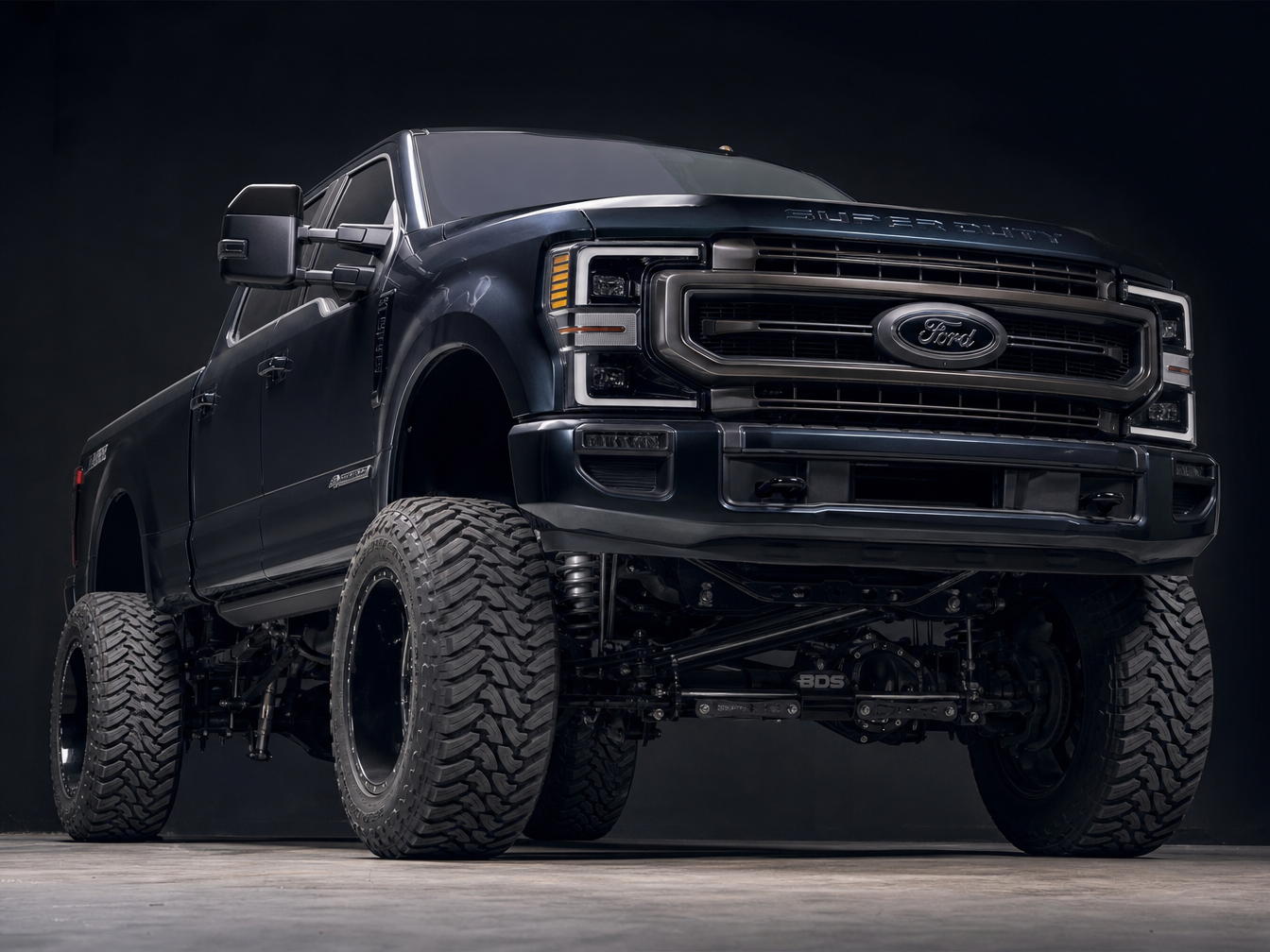
Work trucks. Equipment trailers, flatbeds and service bodies. For these we start with a towing performance package and the transmission that has to survive it.
Ranch and farm trucks. Hay, stock and feed, often over dusty roads. Clean air matters as much as power here, so air intake systems and a sound fuel system come up early.
Weekend trucks. A heavy camper or toy hauler, a long Saturday on the highway, and a tune that should make the pull easier without making the week harder. That is ECM tuning built around drivability.
Getting to the Diesel Shop From Richmond
You have two clean options from Richmond.
The first is US 59 (I-69) northeast to Beltway 8, then north on Beltway 8 to the Westheimer Road exit. Head east and the shop is at 8840 Westheimer Rd, Houston, TX 77063.
The second is the Grand Parkway (SH 99) north to the Westpark Tollway, then east. It is tolled, and it keeps you off US 59 when that road is jammed.
Either way, plan on roughly 35–45 minutes outside rush hour. Our contact page has the address and hours.
What Richmond Driving Asks of a Diesel Engine
Richmond driving is less about the commute and more about the job.
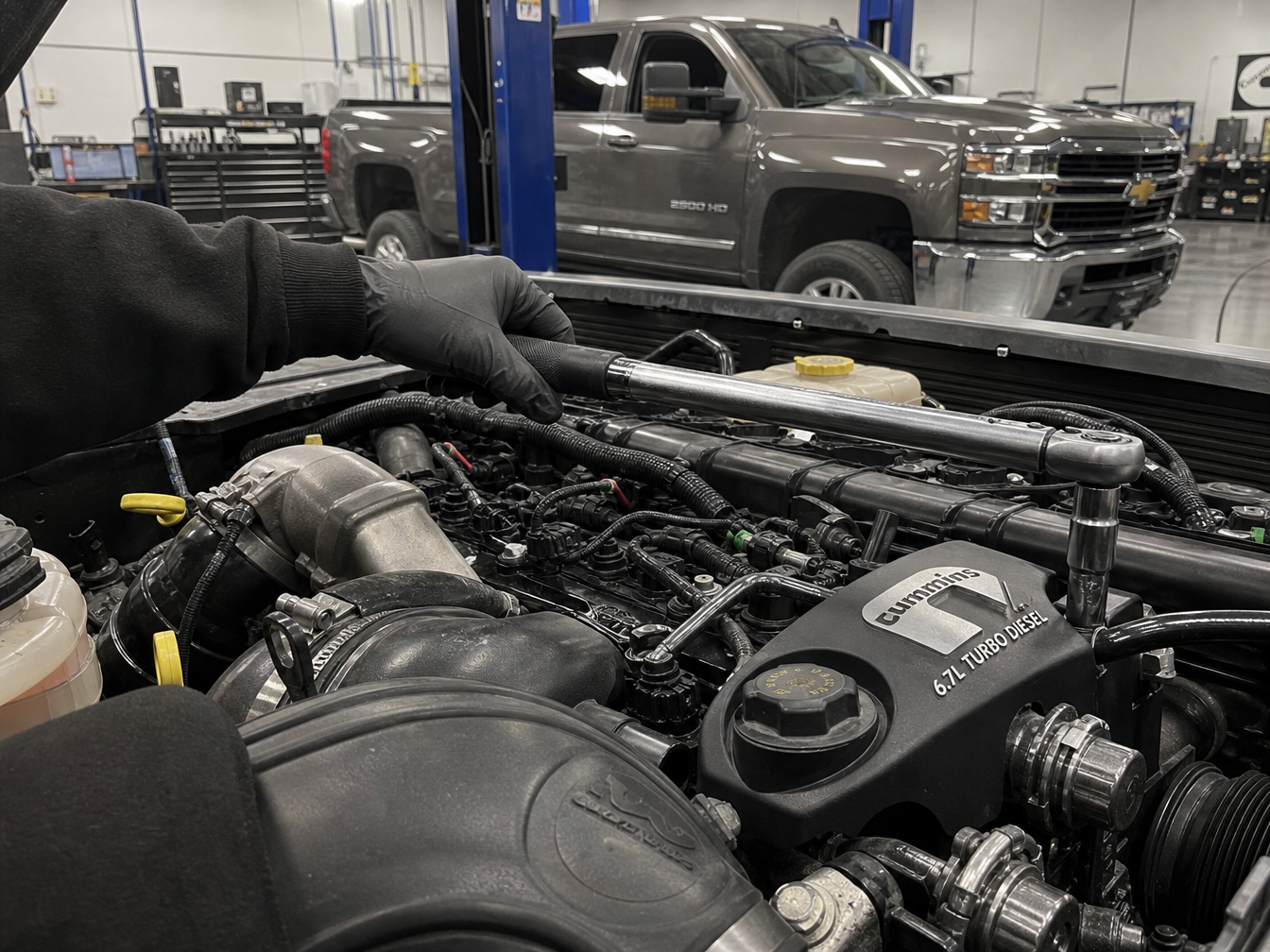
Farm and ranch gates mean low-speed work, idling and frequent restarts, interrupted by highway runs to the feed store, the equipment yard or the coast. Dust finds its way into intake systems, and mud and moisture do the same to connectors. Maintenance and filtration choices that would be overkill on a freeway-only truck are sensible here.
Then there is the weekend. Brazos Bend State Park, a few thousand acres of lakes and trails along the Brazos south of town, draws campers and trailers, and a loaded run down the farm roads and back on Sunday evening is a very different test from a commute.
We build for both halves of that week, the working half and the weekend half, because it is usually the same truck.

Proudly Serving Richmond & Greater Houston Truck Drivers
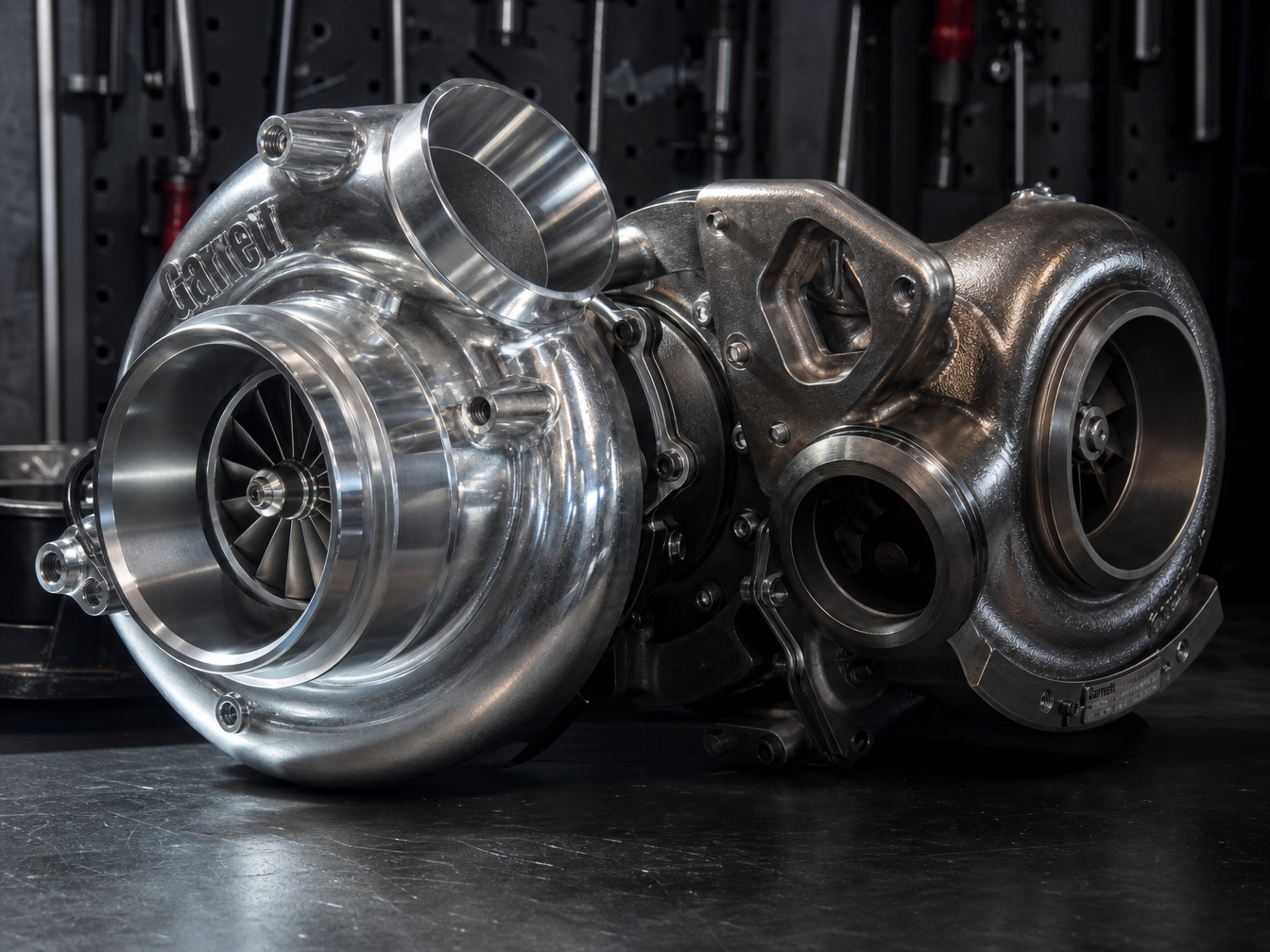
Richmond is the seat of Fort Bend County and part of the western arc of towns we serve. Pick a neighboring city below to see how its route compares.
Questions Richmond Diesel Owners Ask Us
Which is the better way in from Richmond, US 59 or the Grand Parkway?
US 59 to Beltway 8 is the direct line and its main lanes are free. The Grand Parkway north to the Westpark Tollway is a tolled alternative that can be better when US 59 is backed up. Outside rush hour, expect roughly 35–45 minutes either way.
I pull livestock and equipment trailers around Fort Bend County. What should a tune account for?
The trailer, the distance and how often you do it. A tune for weekly heavy hauling should protect cooling and transmission temperatures first and chase power second. We ask about the load before we talk about numbers.
Do dusty farm roads change what a diesel needs?
They can. Dust makes clean intake air and good filtration more important, and mud and moisture are hard on connectors. We look at the intake side early on trucks that work in those conditions.
I tow a camper to Brazos Bend State Park. What should I upgrade first?
Look at cooling and transmission capability before power. A heavy camper on a long weekend run is a thermal test, and a tune only helps if the supporting parts can handle it.
How do I get on the schedule from Richmond?
Book a consultation online. We will go through the truck and how you use it, then lay out a plan before anything is ordered.
From Richmond to Dialed-In
Whether the truck earns its keep on a ranch road or a highway, start with a conversation. Choose a time below and tell us what it has to do.
"They pulled my truck three times to get the tune dialed. Never had a shop do that."
— Cummins 6.7 Owner · Houston, TX