THE DIESEL
BUILD
PROCESS
How every build at Drop Forged Diesel works — from the first consultation to dyno verification. Every truck follows the same six-step process. No guessing, no skipped steps, no surprises at pickup.
Every build starts with a conversation — not a parts order. The consultation is where we establish what the truck does (daily driver, towing, sled pull, drag), what the power target is, and what platform-specific risks apply to the truck in front of us. A 2021 Ram 2500 6.7 Cummins gets a different build conversation than a 2007 Silverado LBZ.
Platform context matters: the Cummins 6.7 CP4 conversation is the first thing we cover on any post-2019 Ram build. The 6.7 Power Stroke EGR cooler assessment happens before any tune goes in on that platform. The LBZ vs LML Duramax question determines the entire build strategy on the GM side.
- Use case: daily / tow / competition / work
- Power target: Stage 1 through Stage 4
- Platform-specific risk assessment (CP4, EGR, trans condition)
- Current maintenance state and mileage review
- Budget and build timeline
After the consultation, we produce a staged build plan — a sequenced list of services in the order they should be done. The plan covers what goes in first, what can wait for a future visit, and what is a prerequisite before anything else happens.
The sequence matters. A high-power tune before a CP3 conversion on a 2019+ 6.7 Cummins is a path toward injection pump failure. A transmission that's borderline on clutch pack condition before a Stage 3 tune is going to fail under the additional torque. The build plan identifies these dependencies before money is spent.
- Sequenced service list — prerequisite work first
- Identified platform-specific risk mitigation steps
- Estimated timeline per stage
- Clear picture of what Stage 1 delivers vs. Stage 3
Most builds include prerequisite work before the performance hardware goes in — fuel system service, transmission fluid and filter, cooling system assessment, and any platform-specific work identified in the consultation. This isn't upselling. These are the items that determine whether the performance components that come next last or fail early.
On the fuel side, a FASS or AirDog lift pump goes in before a high-fueling tune. On the transmission side, fresh fluid and a filter service go in before a tune that increases torque output. The baseline work creates the mechanical foundation the performance work sits on.
- Fuel system: lift pump, filter service, injector inspection
- Transmission: fluid, filter, clutch pack assessment
- Cooling: radiator condition, EGR cooler (6.4 / LML), coolant
- Platform risk: CP3 conversion if indicated
Hardware installation follows the sequenced plan. Turbocharger, intercooler, exhaust, lift kit, wheels, axle work — whatever the build calls for goes in in the right order. Component selection is confirmed at this stage against the build target and the truck's platform-specific requirements.
Every component installed is verified to fit and function before the truck goes on the dyno. Exhaust routing, intercooler pipe clearances, turbocharger mounting and oil lines — we don't hand tune problems to the dyno. The hardware has to be right before the calibration starts.
- Turbo / compound turbo installation and oil line routing
- Intercooler and 3" pipe install
- Exhaust install — 4" downpipe-back or turbo-back
- Suspension, axle, and drivetrain work as planned
- All components verified before dyno session
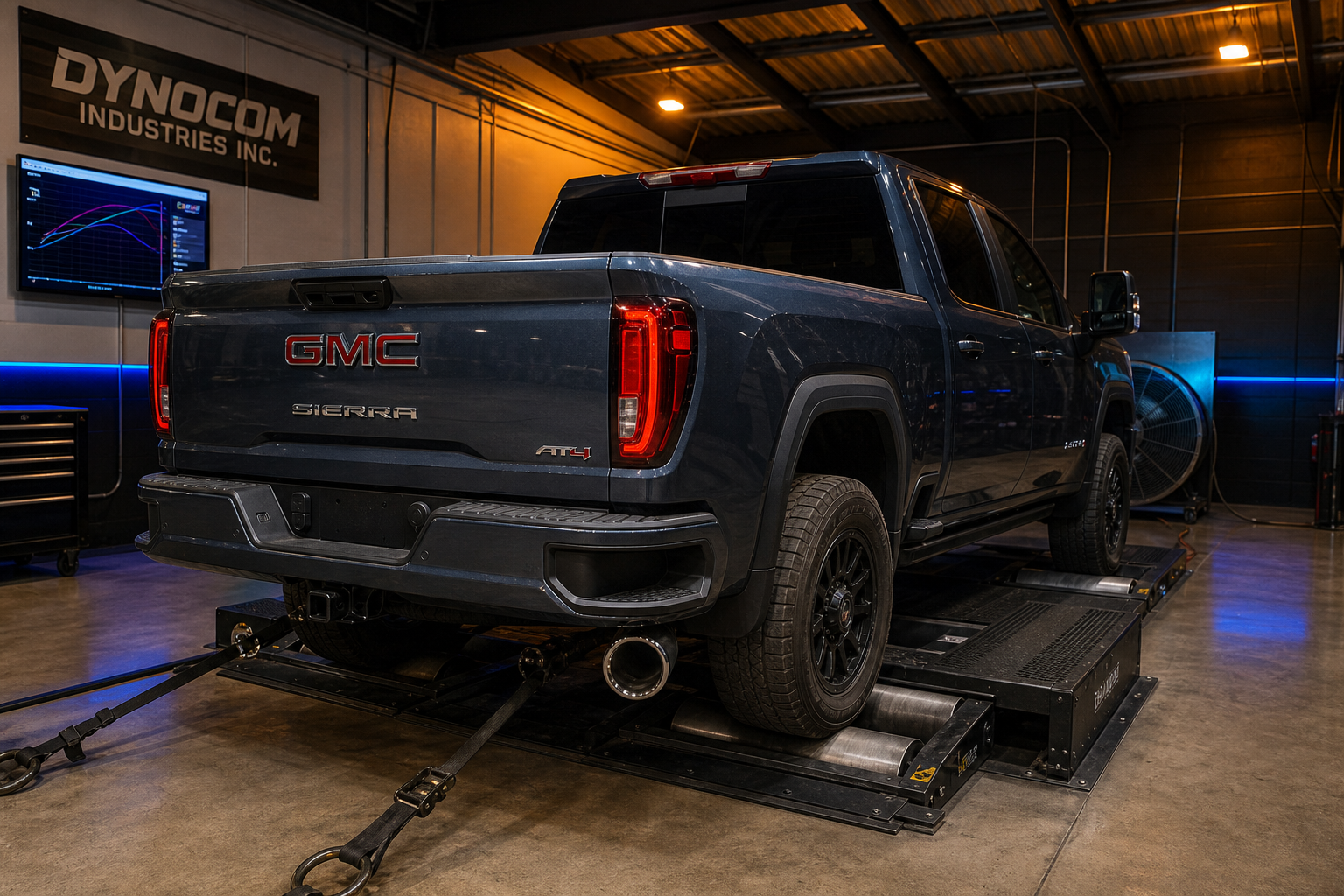
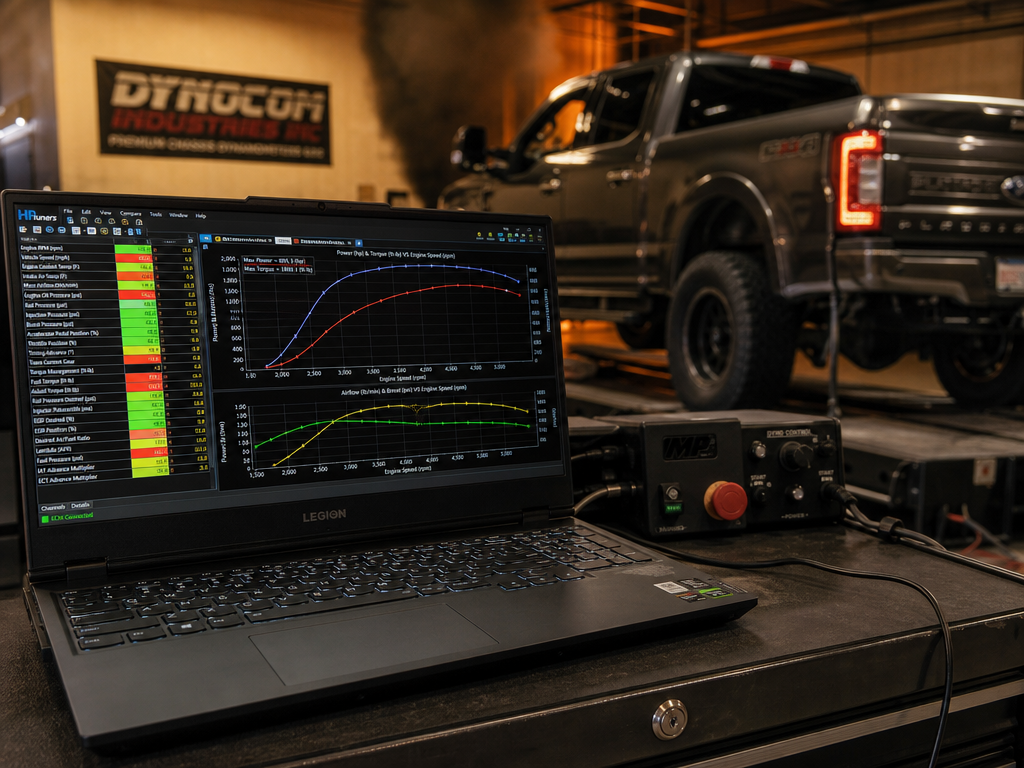
EFI Live calibration is where the build comes together on the dyno. The tune is written live against the truck's actual output — not pulled from a library and flashed in. Every fueling table, boost target, timing map, and torque management parameter is calibrated against the hardware installed in that specific truck.
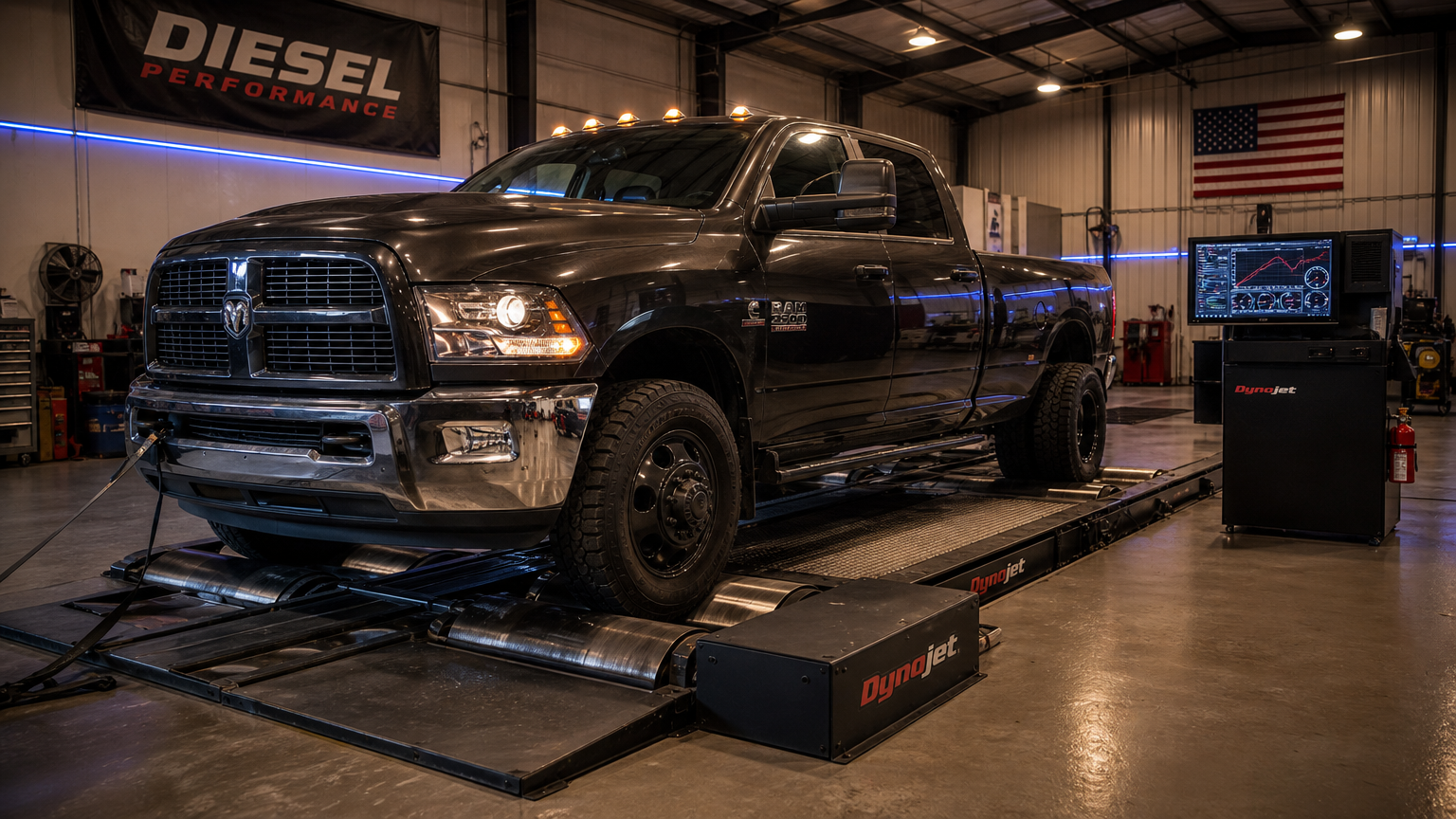
The dyno session produces a power curve, not just a peak number. We're looking at how the tune behaves across the RPM range under load, how EGTs respond to the fueling, and whether the transmission torque management is working correctly with the new output level. Multiple pulls, data logged on each.
- EFI Live live-tuning session on chassis dyno
- Fueling, timing, boost, and torque management calibration
- EGT monitoring throughout — not just at peak
- Multiple pulls — power curve, not just peak
- Before/after rwhp and torque numbers documented
Before delivery, we walk through what was done, what the dyno showed, and what the truck's next build step should be. The build plan doesn't end at pickup — we tell you what Stage 2 looks like from where you are now, and what to watch for on the truck as it gets miles under the new tune.
EGT monitoring instructions if monitoring was installed. Transmission fluid change interval under the new power level. What behavior to flag and bring back in. Platform-specific break-in notes on turbo hardware. We don't hand you the keys and move on to the next truck.
- Build walkthrough — what was done and why
- Dyno sheet — before/after documented
- EGT operating guidance for towing and hard use
- Maintenance intervals under the new power level
- Next build stage recommendations
The Parts Are Easy.
The Sequence Is
What Gets Missed.
The most common diesel performance mistake isn't a wrong parts choice. It's a right parts choice installed in the wrong order. A Stage 3 tune on a truck with a worn CP4 pump and a 68RFE that's never been serviced will produce a dyno pull that looks great — for a while. The sequence is what we've learned from doing this for twelve years.
We follow the same six-step process on every truck because skipping steps is how expensive failures happen. The consultation identifies what's at risk. The build plan sequences the work. The baseline removes the failure points. The installation follows the plan. The dyno tune closes the loop. The delivery hands you the information to run it right.
View the full service catalog for the complete list of what's available across all three diesel platforms.
Build Process FAQ
How the consultation, build plan, and dyno process work.

START WITH THE
CONSULTATION.
The build process starts with a conversation. Tell us what the truck does, what you want it to do, and what platform it is. We'll map the path from there. Book a consultation in Houston and let's scope the build.