DIESEL FUEL
SYSTEM
UPGRADES
CP3 conversions, CP4 failure prevention, FASS and AirDog lift pumps, injector upgrades. The fuel side is what a tune exposes next — and we address it before something fails under load.
The Tune Shows You
What the Fuel System
Can't Handle Yet.
The most consistent failure pattern we see is a custom tune on a stock fuel delivery system. The ECM calibration demands more fuel at higher rail pressure, more often, under sustained load — and the factory lift pump, injectors, or high-pressure pump simply weren't built for that demand profile. Something in the chain gives out, usually the component that was already marginal before the tune arrived.
This is not a reason to avoid tuning. It's a reason to sequence the build correctly. Custom tune written for your platform comes after the fuel system can support the power target — not before. We look at the full delivery chain before writing an aggressive calibration: lift pump condition, filter service intervals, injector health, and high-pressure pump output. Then we tune to what the system can actually sustain.
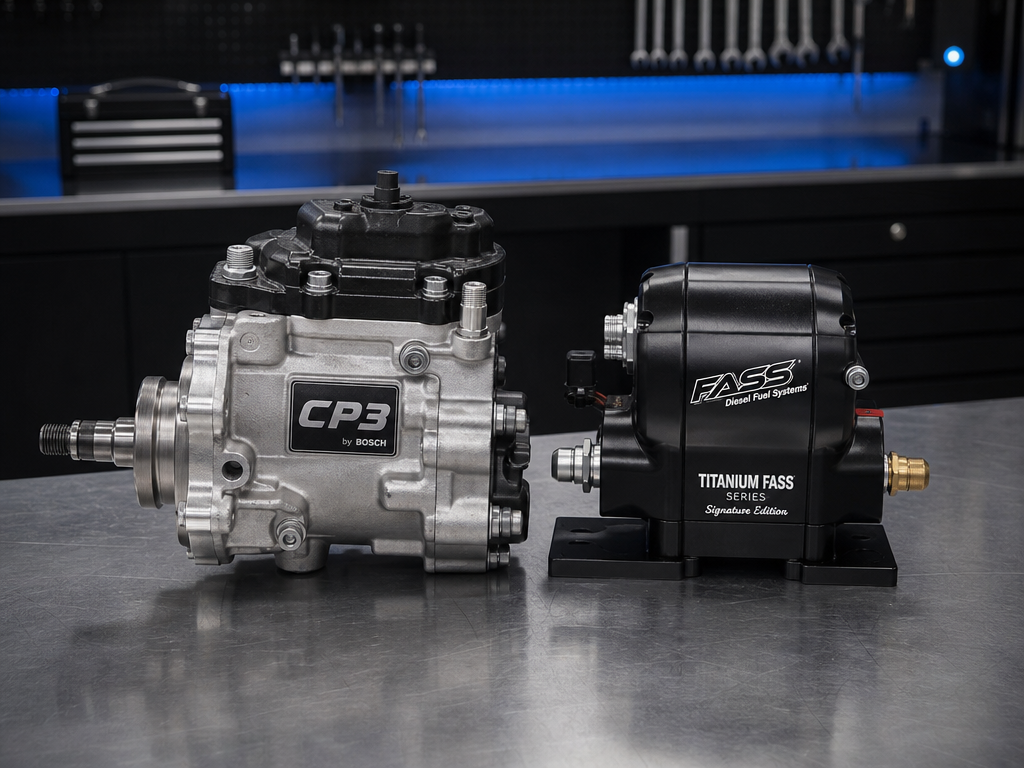
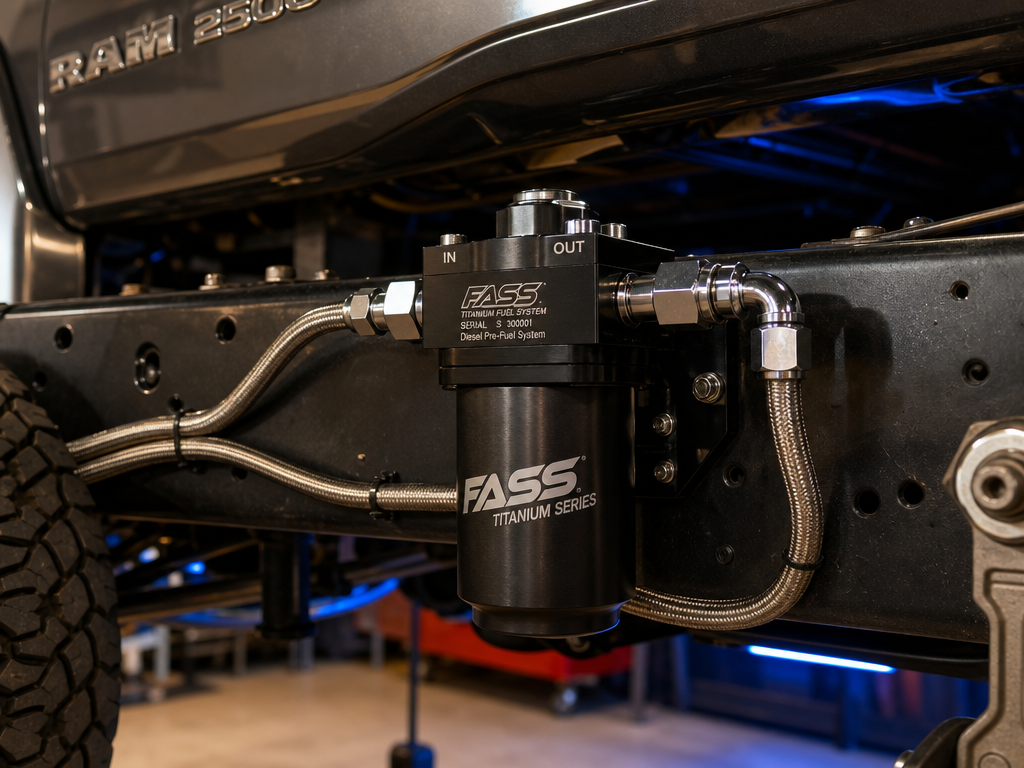
We run FASS on every performance build — not because we have a dealer agreement, but because the filtration and consistent pressure delivery is the single most effective upgrade for long-term fuel system health under a tuned calibration.
The CP4 Issue on the 6.7
Is Not a Maybe. It's a When.
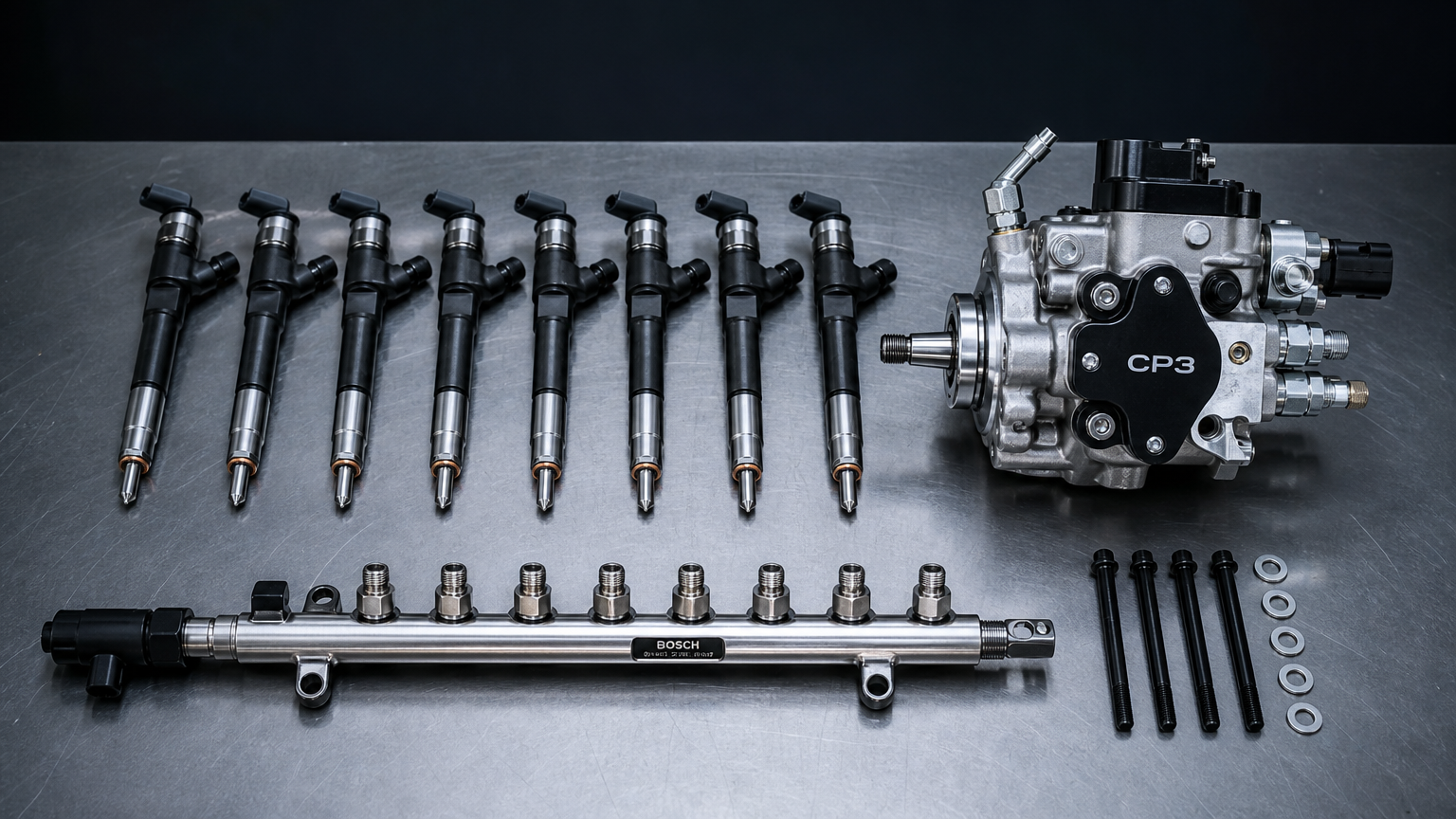
The Bosch CP4 injection pump on the Ford 6.7 Power Stroke is a known failure point — not an edge case, not a bad-luck story. The pump runs on diesel as its own lubrication source. ULSD fuel in the US doesn't lubricate it well enough under the demand profile of a tuned truck. When it fails, it sends metal debris through the entire injection system. The cost of the failure is the pump, the injectors, the fuel rails, and the tank. The cost of the CP4-to-CP3 conversion on the Power Stroke is a fraction of that, done before the failure. We don't equivocate on this one.
Adequate for a stock Power Stroke 6.7 running factory fuel demand. Lubrication-dependent on US ULSD quality. Under-spec for a tuned truck running elevated rail pressure. Known failure mode: catastrophic pump fragmentation sending metal through every downstream injection component. Repair cost: $10,000–$18,000 depending on damage extent.
The Bosch CP3 was designed for the Cummins platform and runs steel-on-steel internals that don't depend on fuel lubricity. Retrofit kits from Industrial Injection, Fleece, and S&S exist for the 6.7 PS and are proven at high power levels. Higher flow capacity, better lubrication tolerance, and no failure chain risk. This is the correct starting point for any tuned 6.7 Power Stroke build.
Three Platforms.
Three Different Fuel Conversations.
Fuel system work on a Cummins is not the same conversation as on a Duramax or a Power Stroke. The injection architecture, pressure requirements, lift pump fitment, and failure modes are distinct across platforms. We work all three and we don't apply the same solution list to each one.
The Cummins 6.7 runs a CP4.2 from the factory starting in 2019. Earlier 6.7s and 5.9s ran the CP3 — one of the strongest high-pressure pump designs in diesel. For 6.7 owners on the CP4, the same CP3 conversion logic applies. For all platforms, lift pump with proper filtration (FASS Titanium is the standard) and injector upgrades at the power levels that warrant them.
The 6.7 Power Stroke — CP4-to-CP3 conversion first, always. The 6.4 runs dual Bosch CP4 pumps and has its own injection system considerations — EGR system interaction plays into fuel system longevity on that platform in ways we discuss before any work starts. Both platforms benefit from FASS filtration and lift pump.
The LBZ and LML Duramax are injector-sensitive platforms. The factory injection sets have a failure threshold under aggressive power — we know where that threshold is and we address it in the build plan before the tune makes it a liability. Lift pump install, injector upgrades from Industrial Injection, and rail pressure management are the core fuel work on these platforms.
Every Component
in the Delivery Chain.
A fuel system build isn't one part. It's the full chain from the tank to the injectors: lift pump pressure and filtration, high-pressure pump capacity, fuel rails, return flow, and injector delivery at the spray pattern, timing, and volume the tune expects. We evaluate the chain as a system and address the weakest link first.
If the turbo upgrade is already on the truck and the tune target requires more fuel volume to match, the injectors are sized for that target — not the last round of build expectations. Turbo systems the fuel supply has to feed are always part of the fuel spec conversation.
Diesel Fuel System FAQ
The questions that come up before we start on the fuel side of any build.

FUEL SYSTEM.
THEN TUNE.
Diesel fuel system upgrades in Houston for Cummins, Power Stroke, and Duramax. CP3 conversions, FASS lift pumps, injector upgrades — sequenced correctly with the tune so nothing in the delivery chain becomes the failure point. Book a consultation and bring the truck in.