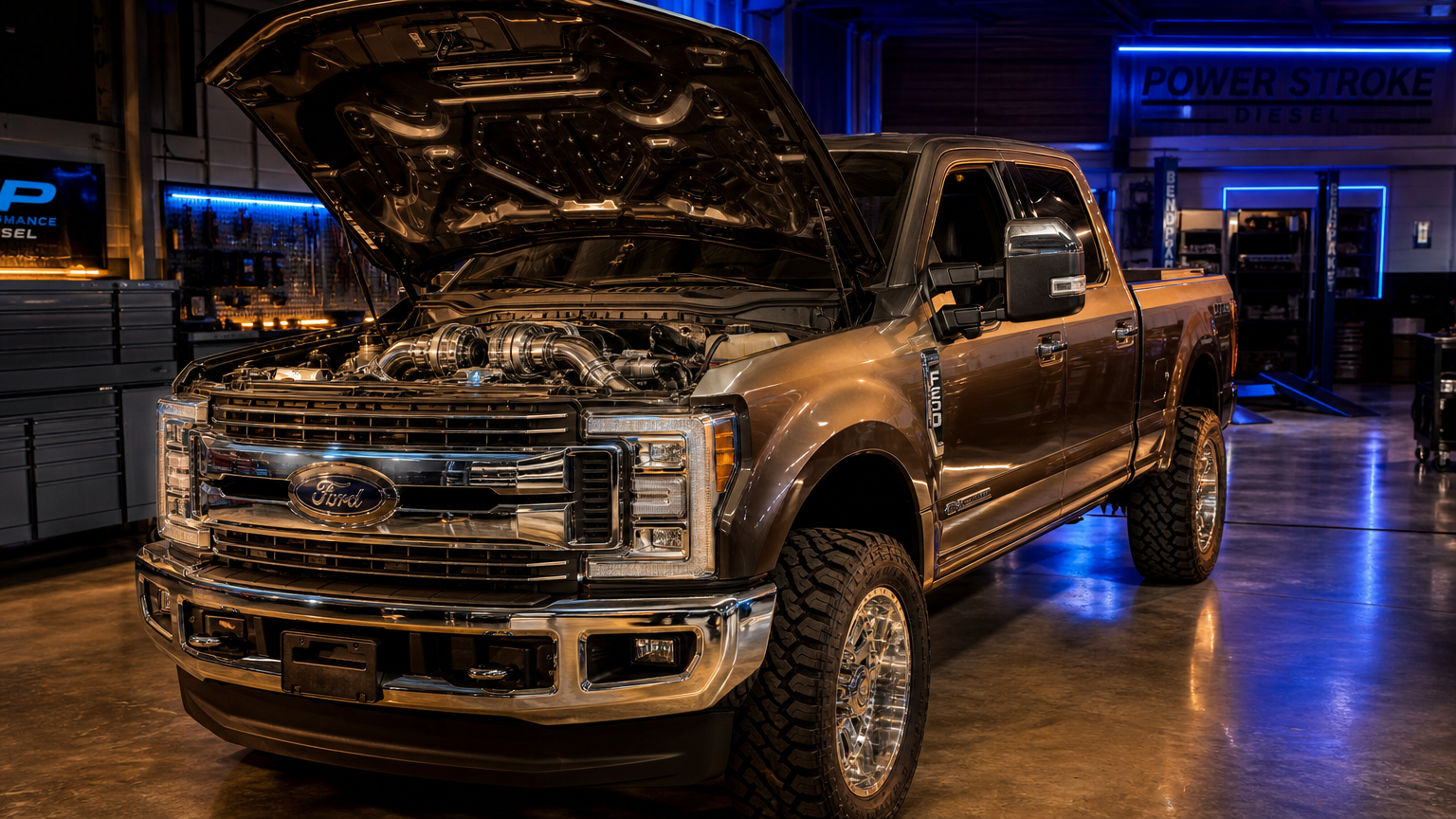
F-250 POWER STROKE
TUNE & FUEL
SYSTEM BUILD
The 6.7 Power Stroke tune and fuel system build path — Stage 1 through Stage 3+, CP3 conversion on 2019+ trucks, and the EGR cooler service that should happen before any tune.
FUEL SYSTEM
BEFORE THE
TUNE. ALWAYS.
The single most common mistake on 6.7 Power Stroke builds is tuning the engine before addressing the fuel system. On the 2011–2018 platform, that means a FASS lift pump before any Stage 2+ calibration. On the 2019+ platform, it means a CP3 injection pump conversion before any meaningful fueling increase goes on.
The CP4 pump used on 2019+ 6.7 Power Stroke trucks has a known catastrophic failure mode under sustained high-fueling demand. A Stage 2 tune without a CP3 conversion is not conservative — it's a timed injection system failure. We address the injection pump before we calibrate. That's the sequence. It adds cost, but it's the cost of not rebuilding the engine.
For the full platform overview, see the F-250/F-350 Power Stroke page. For the fuel system detail, see fuel system upgrades. For the tuning approach across platforms, see the ECM tuning page.
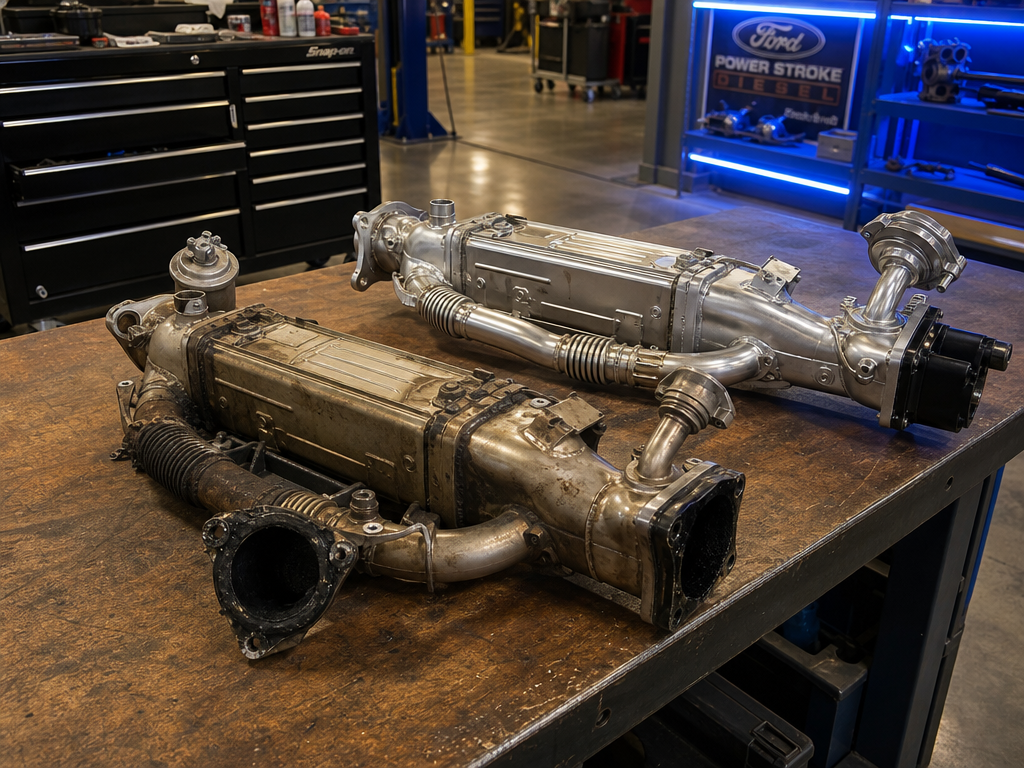
- EGR cooler service — required pre-tune on 2011–2016 trucks
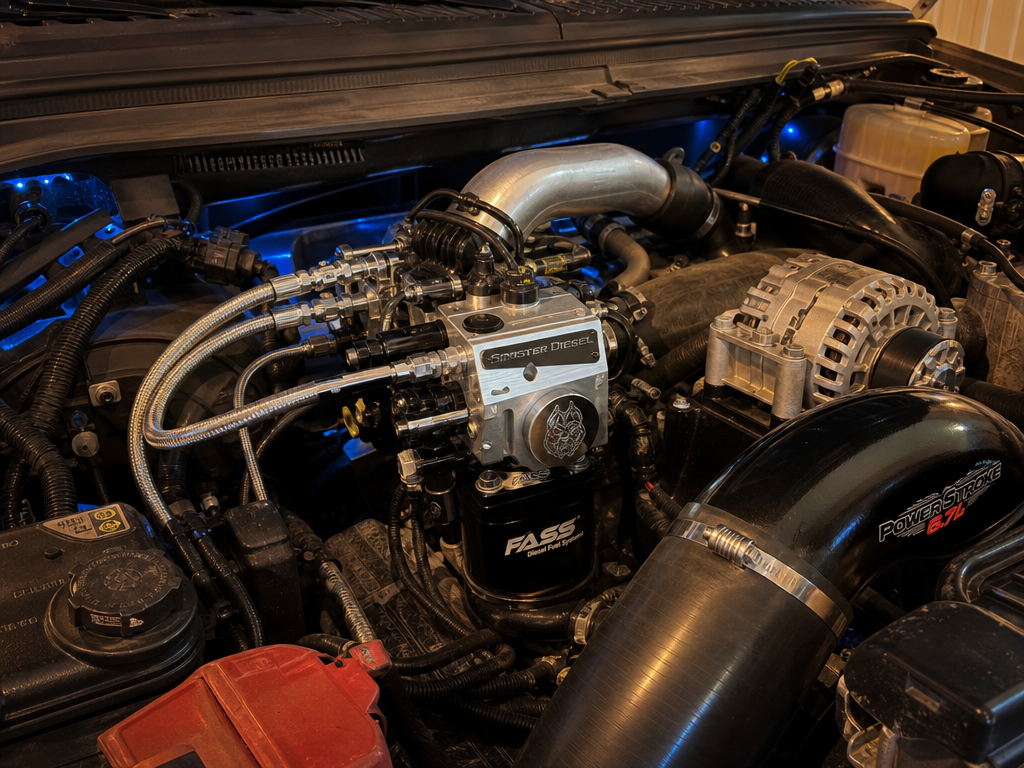
- FASS 150 lift pump — Stage 2+ fuel supply
- CP3 conversion — required on 2019+ 6.7 PS before Stage 2+
- HP Tuners Stage 1 / Stage 2 / Stage 3 calibration
- 6R140 transmission recalibration (included Stage 2+)
- Turbo upgrade optional at Stage 2+ — see turbo page
6.7 Power Stroke Performance Stages
Each stage is a calibration profile — not a pre-loaded tune file. We calibrate on HP Tuners to the specific truck, model year, and supporting hardware. These are not mail-order tunes.
TUNE ONLY
TUNE + FASS + INTAKE
COMPOUND / INJECTORS
The 6.7 PS Fuel System Path
Two separate fuel system concerns on the 6.7 Power Stroke — one is a supply problem (lift pump), one is an injection pump problem (CP4). Both require different solutions and are addressed at different points in the build.
The OEM frame-mounted lift pump on the 6.7 Power Stroke is adequate at stock fueling levels. Under Stage 2+ fueling demand — particularly under sustained tow load — supply pressure to the CP3 or CP4 drops below what the injection pump needs for consistent rail pressure.
A FASS 150 solves the supply problem and also filters better than the OEM fuel system — relevant in Texas where summer ethanol-blend fuel has lower lubricity. We install FASS on every 6.7 PS build at Stage 2 and above.
Ford switched from a CP3 to a CP4 injection pump in the 2019 model year 6.7 Power Stroke. The CP4 is a two-plunger pump with a known failure mode under high-fueling demand — the pump body can crack under pressure spikes, sending aluminum debris through the entire injection system.
CP3 conversion replaces the CP4 with a proven high-flow pump that handles Stage 2 and Stage 3 fueling without failure risk. It's a prerequisite — not an option — on 2019+ trucks before any performance calibration above Stage 1. See the fuel system page for full CP4 failure chain detail.
THE EGR COOLER
SITUATION ON
THE 6.7 PS.
The 6.7 Power Stroke EGR cooler is a known weak point — particularly on 2011–2016 trucks with higher mileage. A failed EGR cooler allows coolant to enter the intake manifold, which causes combustion issues, coolant consumption, and eventually hydrolocked cylinders.
We inspect the EGR cooler condition before any tune on a 2011–2016 6.7 PS. A truck with a compromised EGR cooler doesn't get tuned until it's addressed — because a high-fueling calibration on a truck with a coolant leak into the intake will accelerate the failure timeline significantly.
EGR cooler service — inspection, pressure test, and replacement if needed — is included in our pre-tune inspection on older trucks. For the full transmission context, including how the 6R140 is built for Stage 3 builds, see the transmission upgrades page.
F-250 6.7 Power Stroke Tune Questions
What we hear most before an F-250 6.7 PS build consultation.

TELL US THE MODEL YEAR.
WE'LL PLAN THE REST.
Every F-250 6.7 PS build starts with the consultation — model year determines the fuel system path, and the use case determines the tune stage. Book a consultation and we'll map it out.
BOOK YOUR CONSULTATION