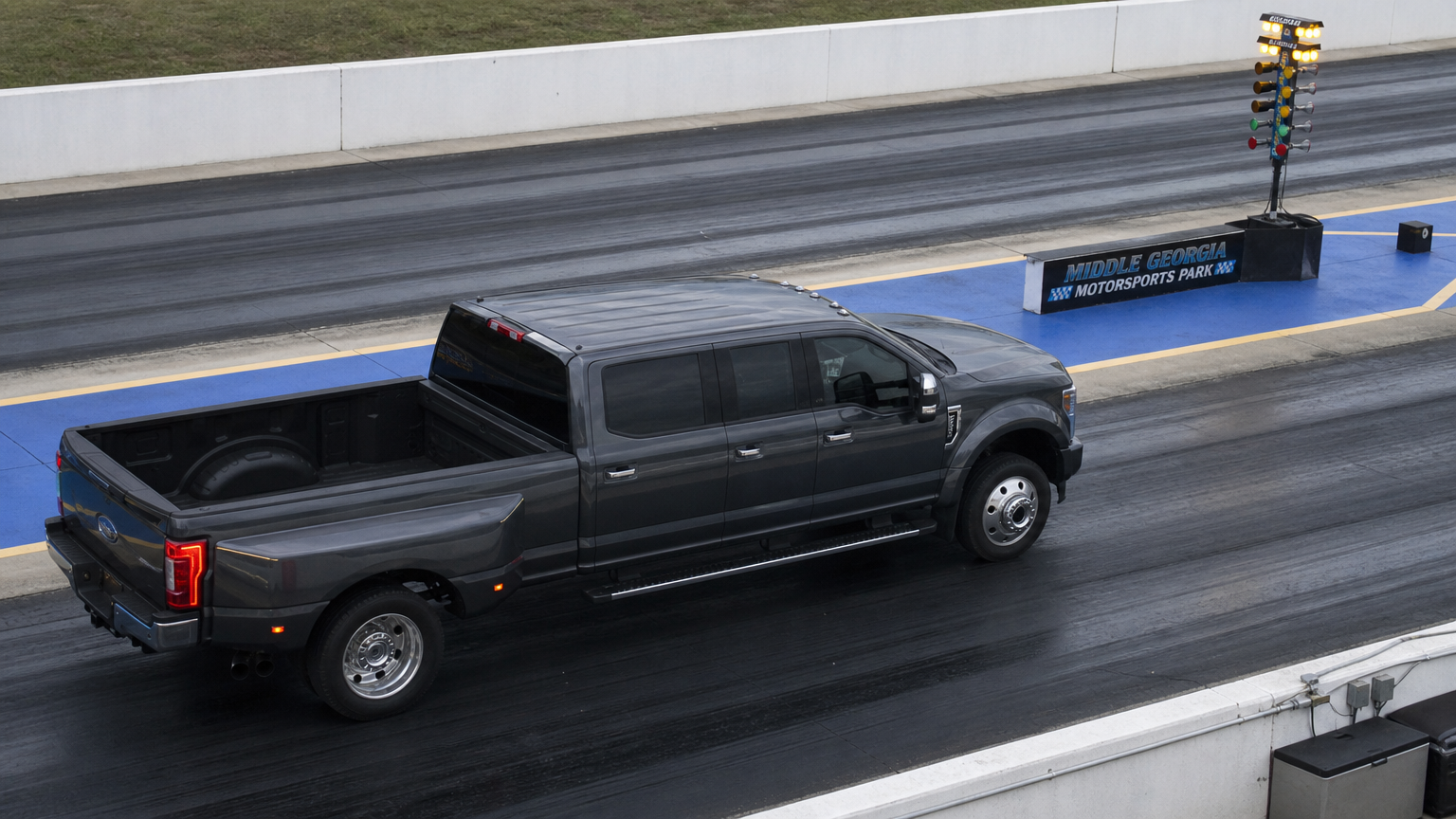
DIESEL DRAG
RACING PREP
Quarter-mile diesel builds require a different approach than tow or sled pull prep. The 60-foot is where races are won or lost — and the tune has to put power down, not just make it.
DRAG DIESEL IS
A TRACTION
PROBLEM FIRST.
The shops that struggle with diesel drag builds focus on the horsepower number. The trucks that run consistent 12s or 11s focus on the 60-foot. A 3,000 lb-ft Cummins that spins tires through second gear doesn't run a good ET — it runs an expensive failure sequence.
Diesel drag prep is a traction management problem as much as a power problem. Torque has to be metered through the launch, not dumped. The tune has to build power across the full quarter mile — not just on the dyno where there's no 60-foot to manage.
We plan diesel drag builds the same way we plan sled pull builds: consultation first, then a sequenced build across fuel system, injection pump, turbo configuration, transmission, and ECM calibration. Each system is sized to the class, the track, and the target ET.
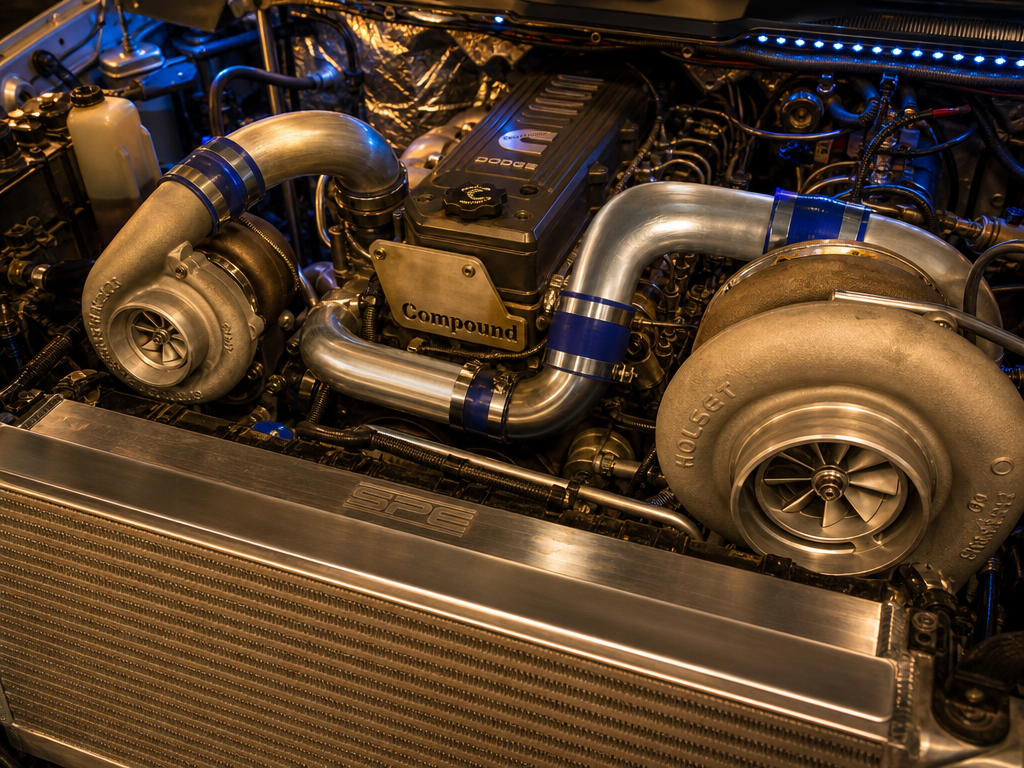
- FASS 150+ lift pump — injection pump demand at WOT requires it
- CP3 conversion on CP4 platforms (2019+ Cummins, 6.7 PS, LML/L5P)
- Single large turbo or compound setup (class-specific)
- Intercooler upgrade — inlet temp management under WOT pulls
- Transmission build — converter, clutch pack, shift calibration
- EFI Live drag tune — launch ramp, WOT curve, separate profile from street
60-Foot Strategy by Platform
The 60-foot determines most of the ET. A 1.9 second 60-foot on an 11-second truck means the rest of the run is consistent power delivery to the stripe. Here's how the launch strategy differs by platform.
| Platform | Launch Strategy | Trans Setup | Torque Management |
|---|---|---|---|
| Cummins 6.7 68RFE / Aisin |
Brake-torque launch at 1,200–1,500 RPM; boost pre-build via 10-second idle-up before stage | Trans brake valve body; TC lock-up strategy on Aisin; servo pressure upgrade on 68RFE | Staged fueling ramp in launch profile — torque is metered through 60-foot, not full dump |
| Duramax LBZ / LML / L5P Allison 1000 |
Allison TC stall increase; launch at 1,500–1,800 RPM with boost pre-built | Allison TC rebuild for higher stall; clutch pack upgrade for competition torque duty | EFI Live (LBZ/LML) or HP Tuners (L5P) launch torque ramp; shift points raised for drag profile |
| Power Stroke 6.7 6R140 |
Trans brake valve body on 6R140; launch at 1,400–1,600 RPM; 1st–2nd shift calibration critical | 6R140 clutch pack and band upgrade; trans brake required for consistent 60-foot | HP Tuners launch torque management; 1-2 shift point elevated to avoid power drop mid-track |
Where Drag Prep Differs from Street Builds
Drag builds share infrastructure with street builds but diverge in tuning philosophy and transmission configuration. These are the systems where the approach specifically differs for the strip.
A quarter-mile drag run is a sustained WOT event. The injection pump is at maximum delivery from launch to the stripe. A FASS 150 or equivalent lift pump is non-negotiable. CP3 conversion on CP4 platforms is required before a high-fueling drag tune can be applied safely.
Street fuel systems that run fine at 75% duty cycle will cavitate under the full WOT demand of a drag run. We size the fuel system to the injection pump and the power target before anything else.
Drag builds have a different turbo priority than tow or sled builds. A large single spools later but flows more at the top end. A compound setup with a small secondary spools fast for the 60-foot, then the primary takes over for the top half of the track.
Class rules typically determine configuration. Work Stock and Street drag classes often run a single modified turbo. Unlimited diesel drag opens to compound configurations and external wastegates. We build to the class you're competing in.
The transmission is where most diesel drag builds fall apart. A stock Allison, 68RFE, or 6R140 shifts on a street calibration — not a drag calibration. The 1-2 shift in a stock tune happens at the wrong RPM, throws power off the power curve, and kills the ET.
We rebuild transmissions for competition torque and recalibrate shift points for the drag profile. The shift calibration is stored as a separate EFI Live profile — same as the pull tune approach. Street shifts are for the street. Drag shifts are dialed to keep power in the band through the entire 1,320 feet.
The drag tune has three phases: launch ramp (torque is metered, not dumped, through the 60-foot), WOT curve (full fueling, boost target, timing advance across the mid-range), and top-end (EGT management and sustaining power to the stripe without thermal cutback).
A street or tow tune has none of that structure — it's optimized for driveability across the RPM range, not for a sustained WOT acceleration event. These are separate calibrations. We dyno both and store them as separate profiles.
A DYNO NUMBER
DOESN'T PREDICT
YOUR ET.
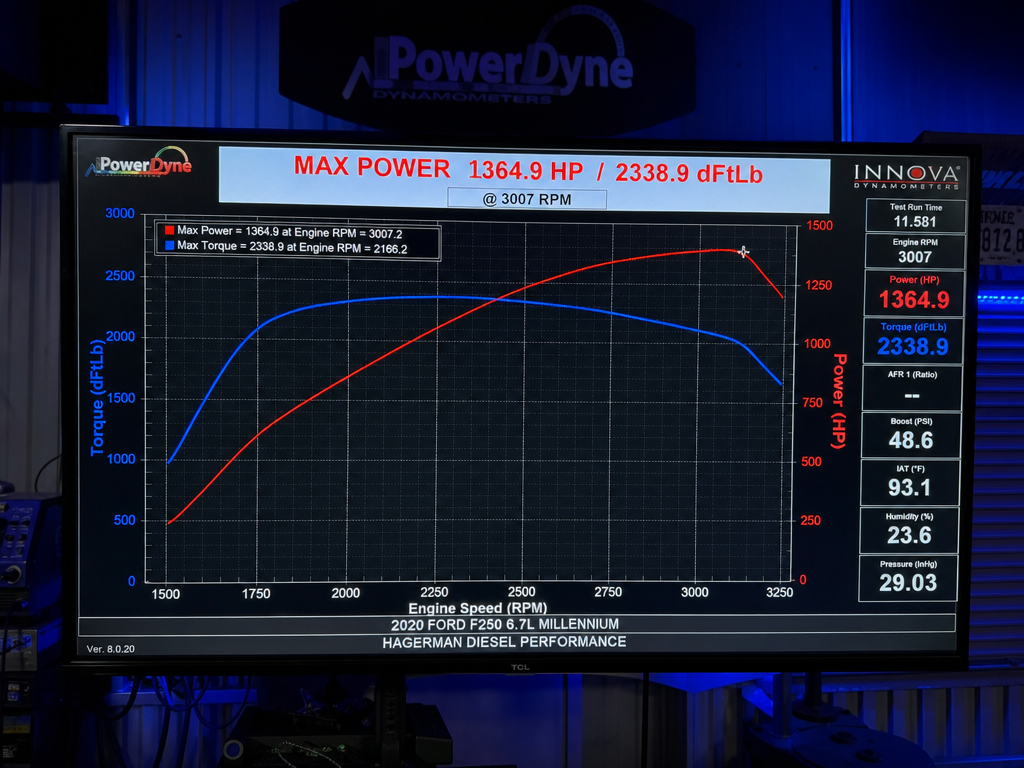
Peak horsepower on a chassis dyno measures power at one point in the RPM range, under controlled load, with no 60-foot. A truck with 700 rwhp and a poorly calibrated launch ramp will spin tires through first gear and run a 13.5. A truck with 550 rwhp and a well-calibrated launch tune will put it down and run a 12.8.
We dyno to verify the power curve and calibrate the WOT tune. We tune the launch ramp separately — and we ask about your track surface, tire width, and target ET before we write it. Those inputs matter. A concrete NHRA-prepped track and a loose bracket-racing asphalt strip need different launch ramp calibrations.
See the ECM tuning page for how we approach calibration on each platform, and the turbo page for compound and single-turbo configuration options.
Diesel Drag Racing Questions
What we're most often asked about quarter-mile diesel builds.
TELL US THE CLASS.
WE'LL PLAN THE BUILD.
Bring the class rules and your target ET. We'll scope the fuel system, turbo, trans, and tune from there.
BOOK YOUR CONSULTATION