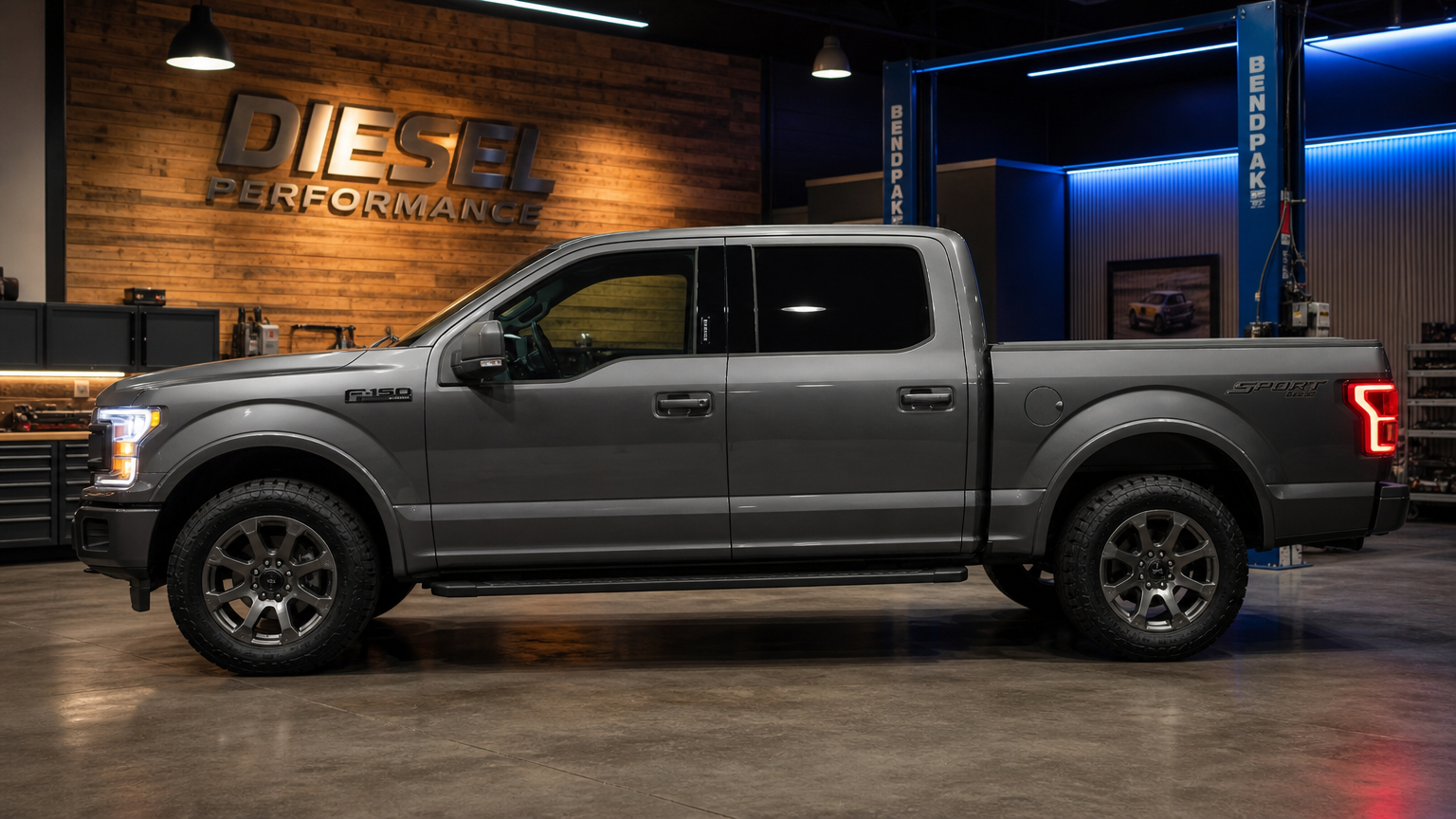
FORD F-150
DIESEL PERFORMANCE
The F-150 3.0L Power Stroke is a capable truck with a limited performance aftermarket. Here's an honest picture of what's available and what the platform can actually support.
THE F-150 DIESEL
IS A DIFFERENT
ANIMAL.
If you're coming to us expecting a conversation about compound turbos, CP3 conversions, and 500 rwhp, the F-150 3.0L Power Stroke isn't that truck. Ford's half-ton diesel is engineered for fuel economy and light towing in a package that competes with gas V8s — not for the heavy build path that defines the 6.7 Super Duty lineup.
The 3.0L Lion V6 diesel makes 250 horsepower and 440 lb-ft of torque from the factory. The aftermarket for this engine is limited compared to the 6.7 Power Stroke. HP Tuners supports ECM access, and there's an exhaust and intake market — but the performance ceiling on the 3.0L is meaningfully lower than on any of the HD diesel platforms we build.
That said — if you own an F-150 diesel and want to maximize what the platform can do with an ECM tune, exhaust upgrade, and fuel system attention, we can do that. We're just going to be direct about what you're working with before the consultation, not after. See the 6.7 Power Stroke page if you're considering the Super Duty platform instead.
- 27–30 MPG highway in real-world driving
- 11,500 lb tow rating — adequate for most trailers
- Strong low-end torque for a half-ton platform
- Better fuel economy improvement from tuning than gasoline
- Smooth, refined power delivery for daily driving
- High-output performance — platform ceiling is low
- Heavy compound turbo upgrades — not available
- CP3 injection pump path — different injection system
- Compete with 6.7 Power Stroke on tow capacity or power
- Support the drivetrain torque of HD diesel builds
F-150 3.0L Power Stroke — Stock Baseline
Understanding the stock platform is the starting point for any performance conversation. These are the numbers the engine is built around.
What We Build on the F-150 Diesel
The performance window on the 3.0L is narrower than the HD platforms — but within that window, the right combination of tune, exhaust, and fuel system work produces a meaningfully better truck.
HP Tuners supports ECM access on the F-150 3.0L. A calibration focused on fueling tables, boost targets, and throttle response produces a more responsive truck with noticeably better low-end pull — useful for towing and daily driving.
Realistic gain expectation: 20–35 lb-ft additional torque, improved throttle response, and fuel economy gains of 1–3 MPG on highway cycles. This is not a 100 rwhp platform — set expectations before the consultation. See the ECM tuning page for full platform detail.
The factory 3.0L exhaust is restrictive relative to what an aftermarket cat-back can flow. An exhaust upgrade on the F-150 diesel primarily improves exhaust note and EGT margin — the power gain is modest but real when paired with a tune.
MBRP and other manufacturers offer emissions-legal cat-back and downpipe options. We don't do DPF or emissions deletes on any platform — see the exhaust systems page for the full approach.
The F-150 3.0L uses a common-rail injection system that benefits from clean, consistent fuel delivery — especially on Texas summer ethanol-blend fuel. A quality fuel filter upgrade and supply line inspection are standard on any F-150 diesel tune appointment.
The 3.0L doesn't support the FASS / AirDog aftermarket lift pump ecosystem that the HD platforms use. Fuel system attention on this platform is maintenance-focused. See the fuel system page for context.
WHEN TO CONSIDER
THE SUPER DUTY.
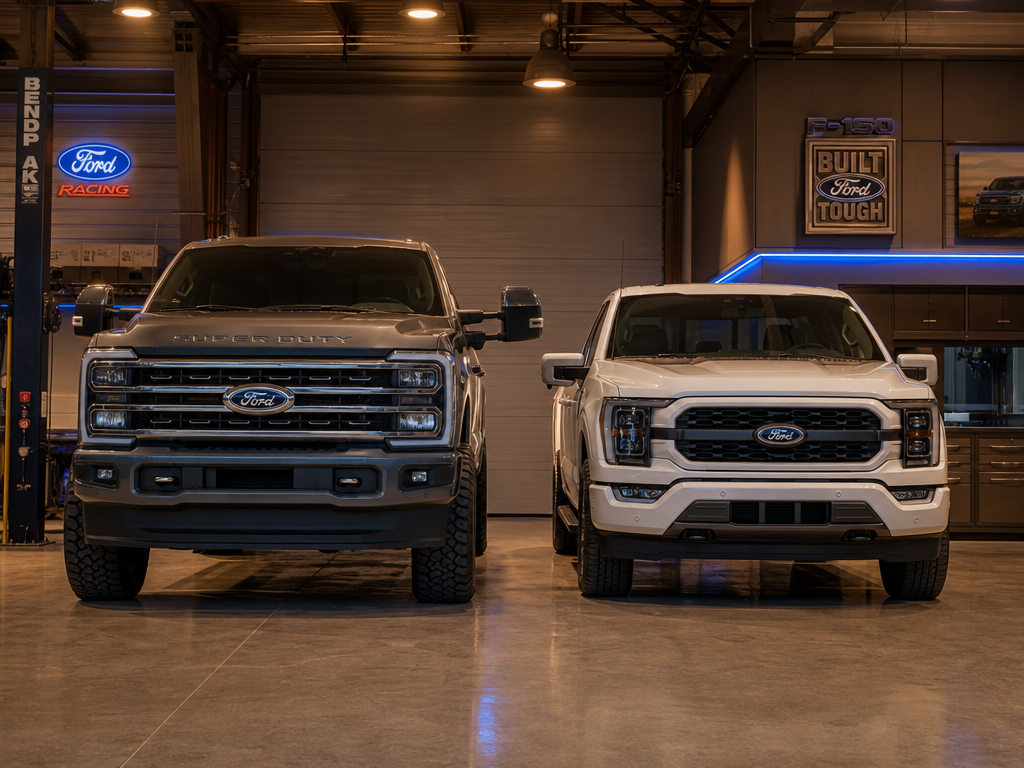
If your use case involves consistent heavy towing — fifth wheel, gooseneck, RV, or commercial — or you want meaningful performance gains beyond what a tune and exhaust can provide, the 6.7 Power Stroke in an F-250 or F-350 is the truck to build.
The 6.7 PS platform has a deep aftermarket: CP3 conversions, compound turbos, transmission rebuilds, and the full build path we execute on Cummins and Duramax. The F-150 diesel does not.
If you're already in an F-150 diesel and want to maximize what you have, we'll do that honestly. If you're in the market and towing performance is the priority, we'll tell you the same thing at the consultation that we're telling you here. The 6.7 Power Stroke page covers what that platform can do.
F-150 3.0L Power Stroke Questions
What we're asked most about the half-ton diesel F-150.
LET'S TALK ABOUT
WHAT YOUR F-150 CAN DO.
We'll give you an honest assessment of the platform, what's achievable, and what a build looks like from there. No overselling — just a straight answer.
BOOK YOUR CONSULTATION