DIESEL EXHAUST
SYSTEMS
HOUSTON
Downpipe-back and turbo-back exhaust systems for Cummins, Duramax, and Power Stroke diesel trucks. Performance exhaust matched to the build — and the tune is revised after every exhaust install.
Exhaust Work Isn't
Standalone. It's Part
of the Build System.
An exhaust upgrade on a diesel truck reduces backpressure in the exhaust path, lowers exhaust gas temperatures under load, and allows the engine to breathe more freely at elevated fueling levels. That's real benefit. What it doesn't do is add power by itself on a diesel in any significant quantity — the power comes from the tune and the fueling, and the exhaust allows that fueling to run cleaner and cooler.
The practical reason to prioritize exhaust work: on a turbocharged diesel, reduced backpressure helps the turbo spool and improves turbo-back exhaust for compound setups where backpressure management is part of the compound turbo calibration. The exhaust system also affects EGT — and EGT management matters under hard towing or competition pulls.
The tune is revised after the exhaust install. An exhaust system that changes flow characteristics without a corresponding tune revision leaves performance on the table. The two go together. See the tune calibrated after the exhaust upgrade for how we handle the sequence.
Downpipe-Back or Turbo-Back —
Right System for the Build.
The exhaust system type depends on the platform, the emission configuration, and the rest of the build. We don't recommend turbo-back on a truck that still has a functioning DPF — that's an emissions discussion that belongs at the consultation, not here.
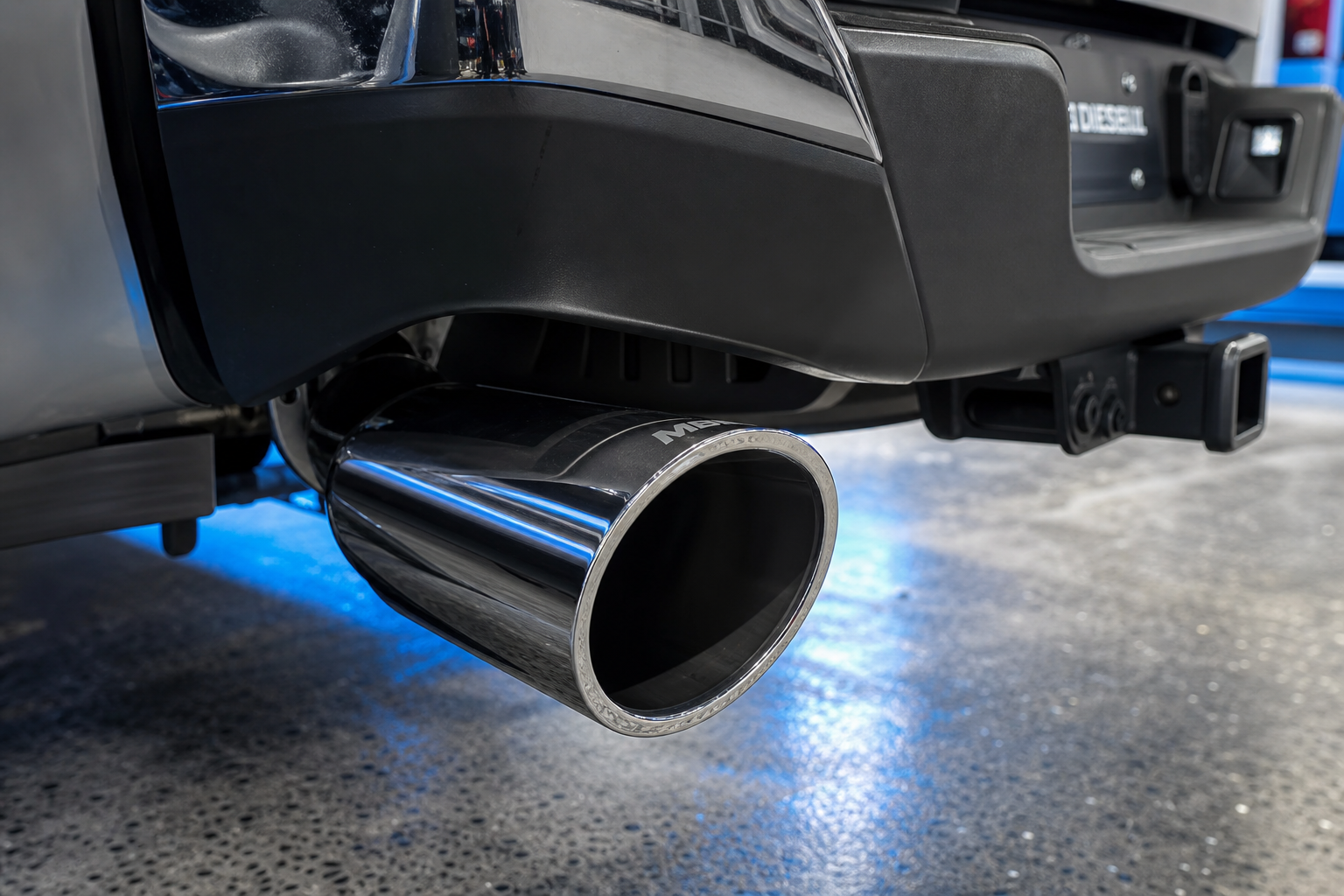
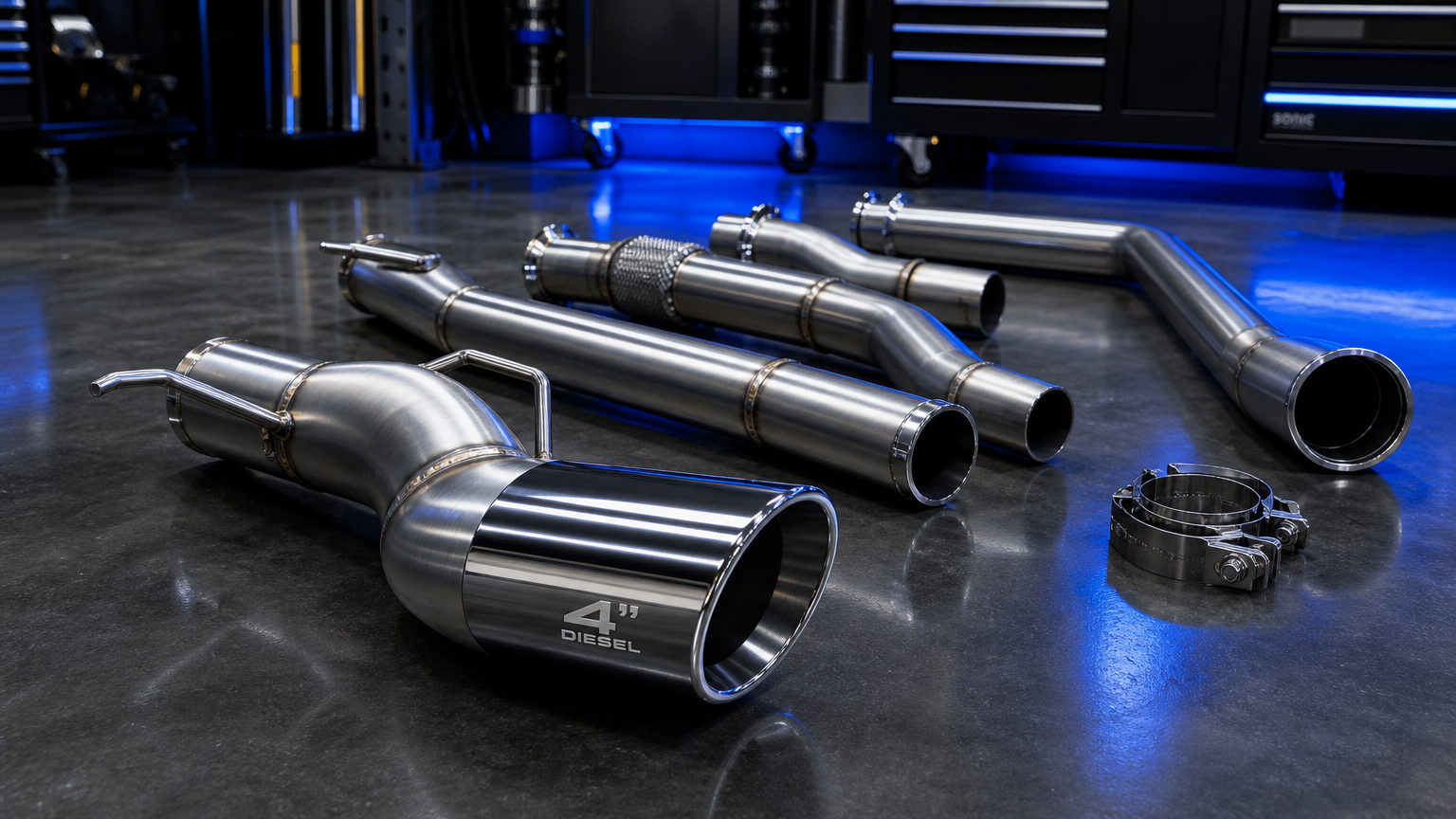
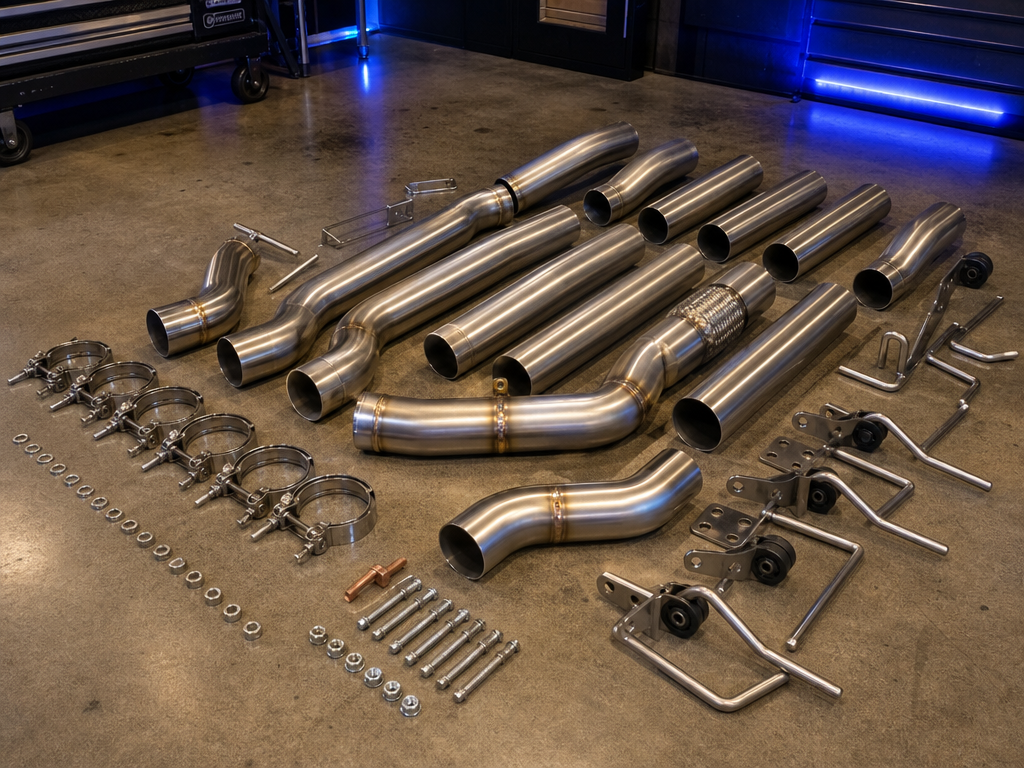
The downpipe-back system replaces the exhaust from the turbo outlet back to the tip. On emissions-compliant trucks, it works with the existing DPF and emissions hardware while improving flow after the downpipe. 4-inch mandrel-bent stainless, muffler delete or performance muffler option, single or dual tip configuration. This is the right path for trucks that need to pass emissions or prefer to keep the emissions system intact. Tune revision after every install. Intercooler alongside the exhaust is a common pairing on performance builds.
- 4" mandrel-bent stainless steel
- Works with existing DPF — emissions-compatible
- Muffler delete or performance muffler
- Single or dual tip options
- Tune revision after install
A turbo-back system replaces the full exhaust from the turbo housing to the tip — including the downpipe. Maximum flow reduction for compound turbo builds, sled pull prep, and high-power competition applications. This configuration affects emissions system function. The conversation about emissions compliance happens at the consultation. We reference the emissions policy page for anyone considering a turbo-back system on a street-driven truck. Tune revision is mandatory and more substantial after a turbo-back install versus a downpipe-back.
- Full system from turbo to tip
- Maximum backpressure reduction
- Required for compound turbo competition builds
- Emissions discussion required at consultation
- Tune revision — more significant than DP-back
Cummins. Duramax.
Power Stroke.
4-inch downpipe-back systems for the 6.7 Cummins reduce EGT under hard towing meaningfully. Stack exit or side exit depending on build configuration. The 6.7 Cummins with a compound turbo and a downpipe-back or turbo-back system responds well to the resulting EGT headroom at elevated fueling. Cummins exhaust upgrade as part of the Ram 2500 build.
The LBZ Duramax is the cleanest exhaust upgrade platform in the Duramax lineup — no DPF to work around. LML and L5P require discussion about the existing emission hardware at consultation. Downpipe-back for street builds, turbo-back for competition. Duramax exhaust upgrade as part of the Silverado 2500 build.
The 6.7 Power Stroke runs a single turbo configuration with the DPF integrated into the emission system. Downpipe-back is the standard path on street-driven 6.7 trucks. The 6.4 Power Stroke has different exhaust routing considerations — discussed at consultation for that platform. Power Stroke exhaust upgrade as part of the F-250 build.
Diesel Exhaust Upgrade FAQ
What diesel truck owners ask before an exhaust install.

EXHAUST THAT
EARNS ITS PLACE.
Diesel exhaust systems in Houston for Cummins, Duramax, and Power Stroke trucks. Every install is paired with a tune revision — because an exhaust without a calibration update is half a job. Book a consultation and we'll scope the right system for your build.