ARP HEAD STUDS
INSTALLER
HOUSTON
HEAD GASKETS
FAIL. HEAD STUDS
DON'T LET THEM.
Stock head bolts are torque-to-yield fasteners — they stretch once during installation and are designed to be replaced. Under the increased cylinder pressure and thermal cycling of a performance diesel tune, that one-time clamping load isn't enough. Head gasket failures on tuned diesel engines are almost always a fastener problem, not a gasket problem.
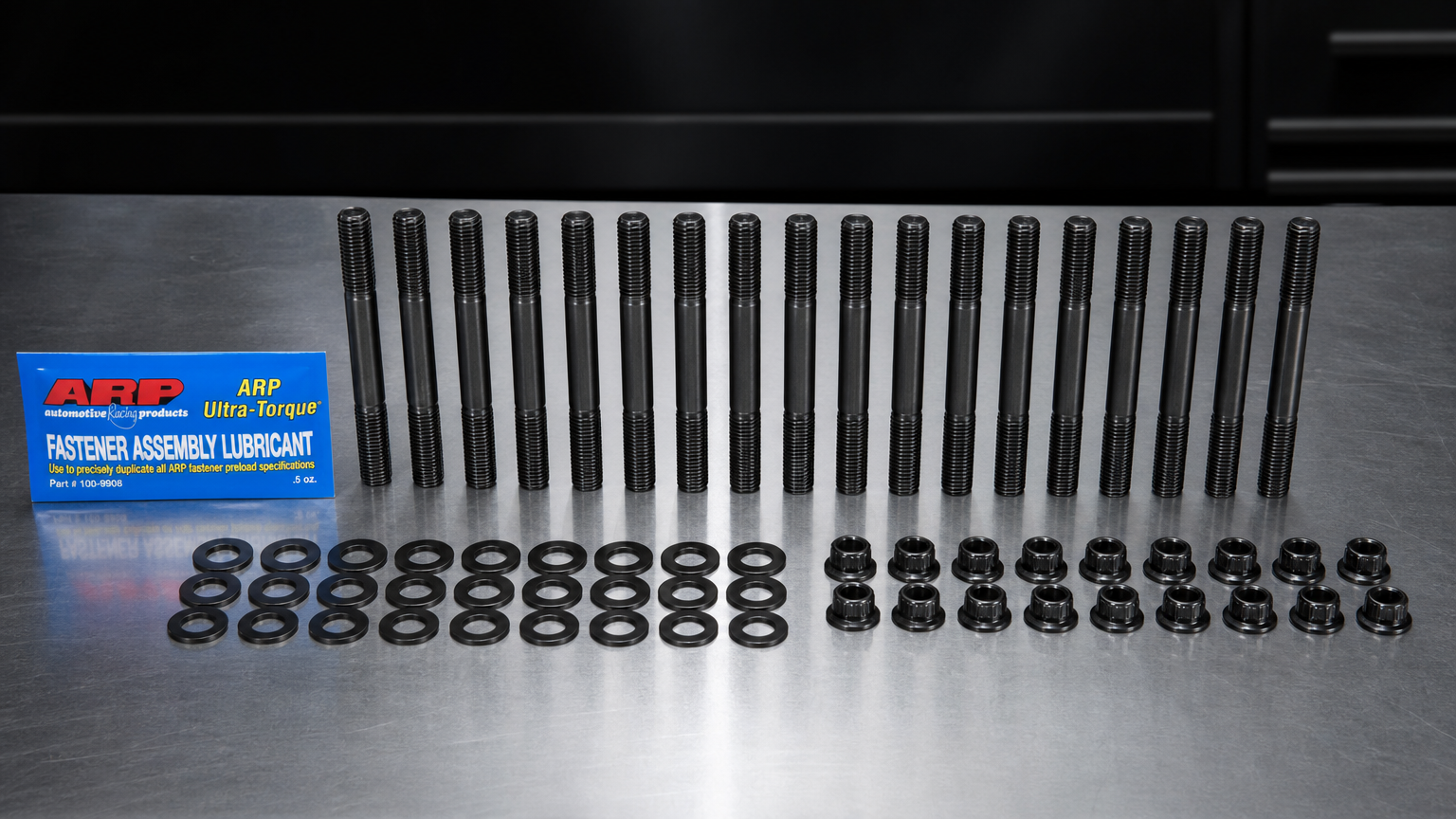
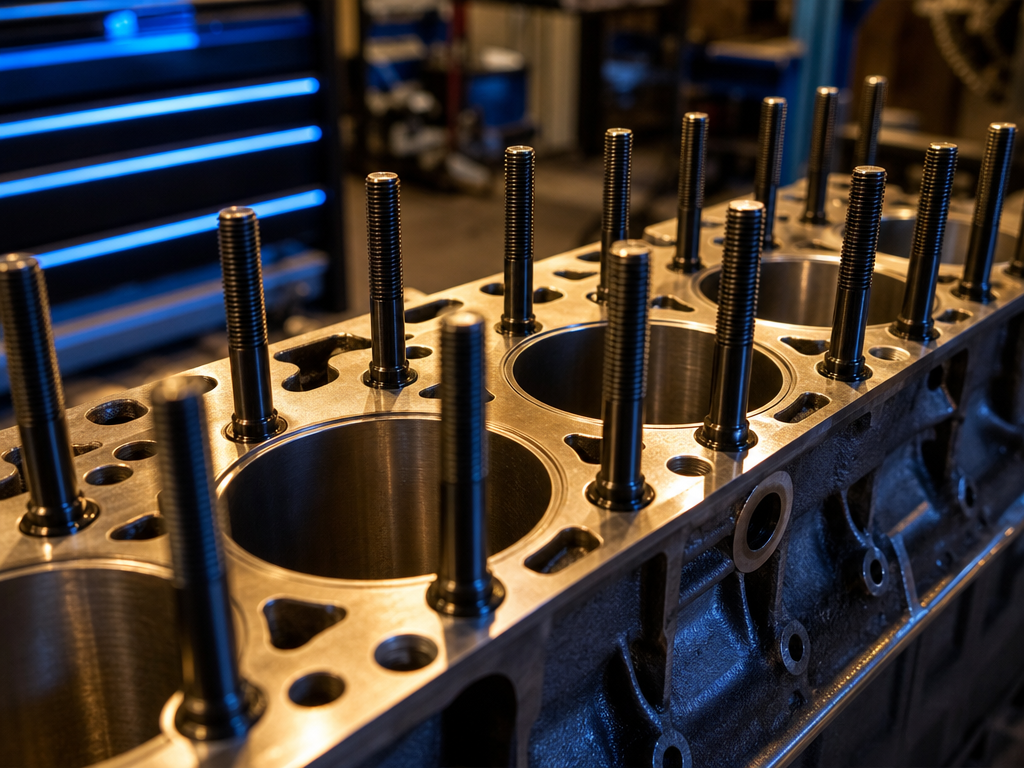
ARP 625+ studs are made from a proprietary 8740 chrome moly alloy rated to 200,000 PSI tensile strength — significantly stronger than OEM bolts. Because studs load the block and head in pure tension (no rotational torque during installation), clamping load is uniform across every fastener. The head gasket stays where it belongs.
On any build that adds a performance tune, compound turbo, or upgraded injectors, head studs are not optional. We install ARP on every boosted diesel build we do. We don't tune over stock head bolts on high-output builds. The consequences of a head gasket failure at high cylinder pressure — coolant into the combustion chamber, a hydrolocked engine — are too expensive to risk for the cost of a stud kit.
ARP studs are also reusable across head gasket services, which matters on high-output trucks that see regular maintenance cycles. See our engine tuning page for how head studs fit the overall build sequence, and the turbo and forced induction page for the compound builds where studs are always on the parts list.
ARP Head Studs by Diesel Platform
We install ARP studs on all three major HD diesel platforms. Each has a platform-specific kit and torque specification.
5.9 & 6.7
6.0 / 6.4 / 6.7
LBZ / LML / L5P
Why ARP 625+ Outperforms Stock Head Bolts
Four specific reasons why ARP studs are the correct fastener for a performance diesel — not a preference, a material and engineering difference.
HOW WE
INSTALL ARP.
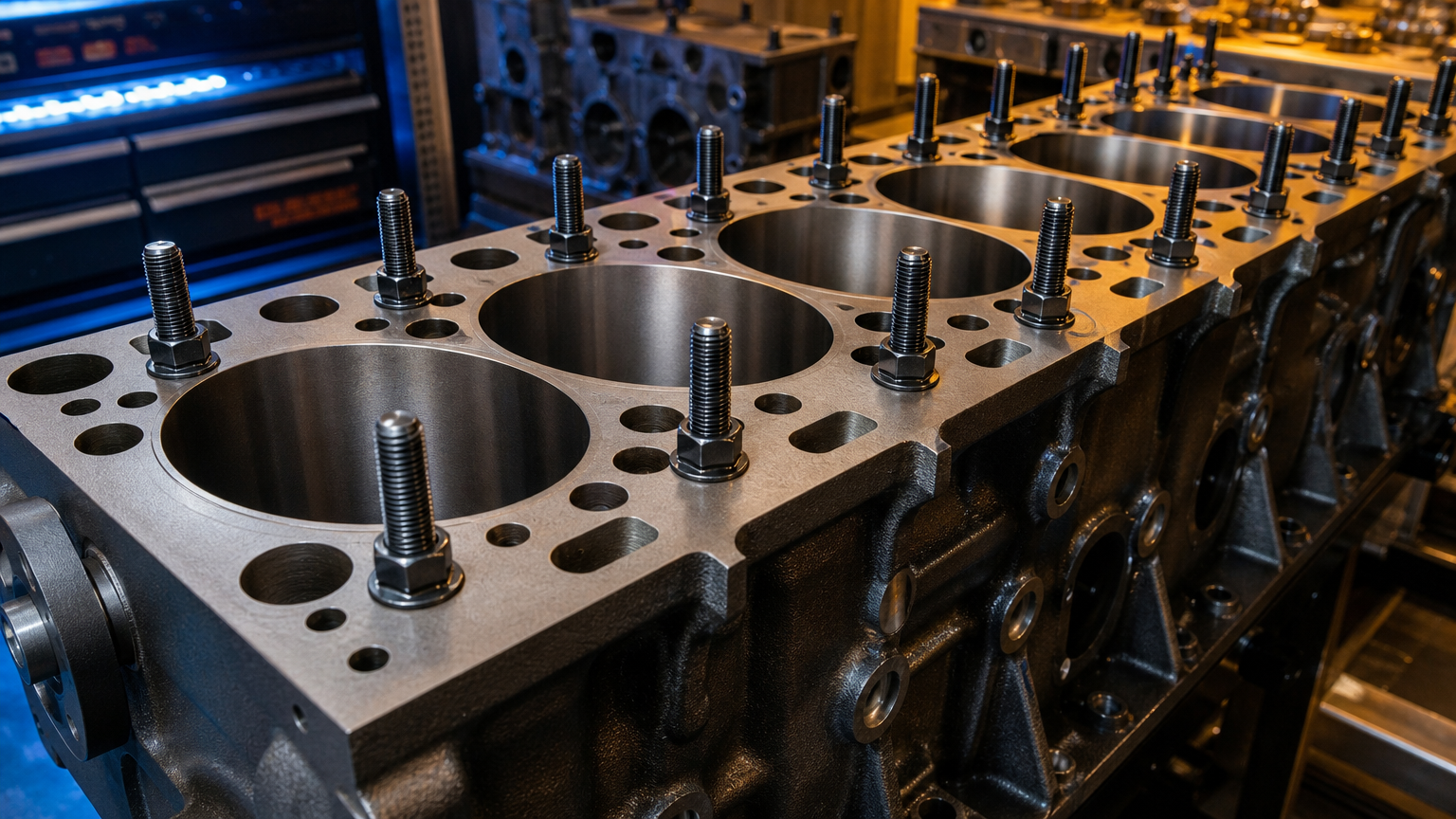
ARP head stud installation on a diesel engine requires a complete top-end disassembly. We treat every stud install as an opportunity to inspect everything we'd otherwise never see without pulling the head — deck surface, water jacket condition, coolant passage condition, and valve train components.
On 6.0 Power Stroke trucks in particular, we recommend addressing the EGR cooler and oil cooler at the same time as the stud install — the labor overlap makes it the right time for both. On Cummins builds going into a compound turbo configuration, studs go in before the turbo kit, never after.
All stud installations are torqued in sequence per ARP's published specification for the specific application. We use ARP Ultra-Torque fastening lubricant on all threads and under all nut-bearing surfaces.
ARP Head Stud FAQ
Questions we hear regularly about ARP stud installation and what triggers the install.
SCHEDULE YOUR
ARP INSTALL
Tell us your platform, current power level, and build goals. We'll confirm whether studs belong in your build now or at your next stage.
BOOK YOUR CONSULTATION